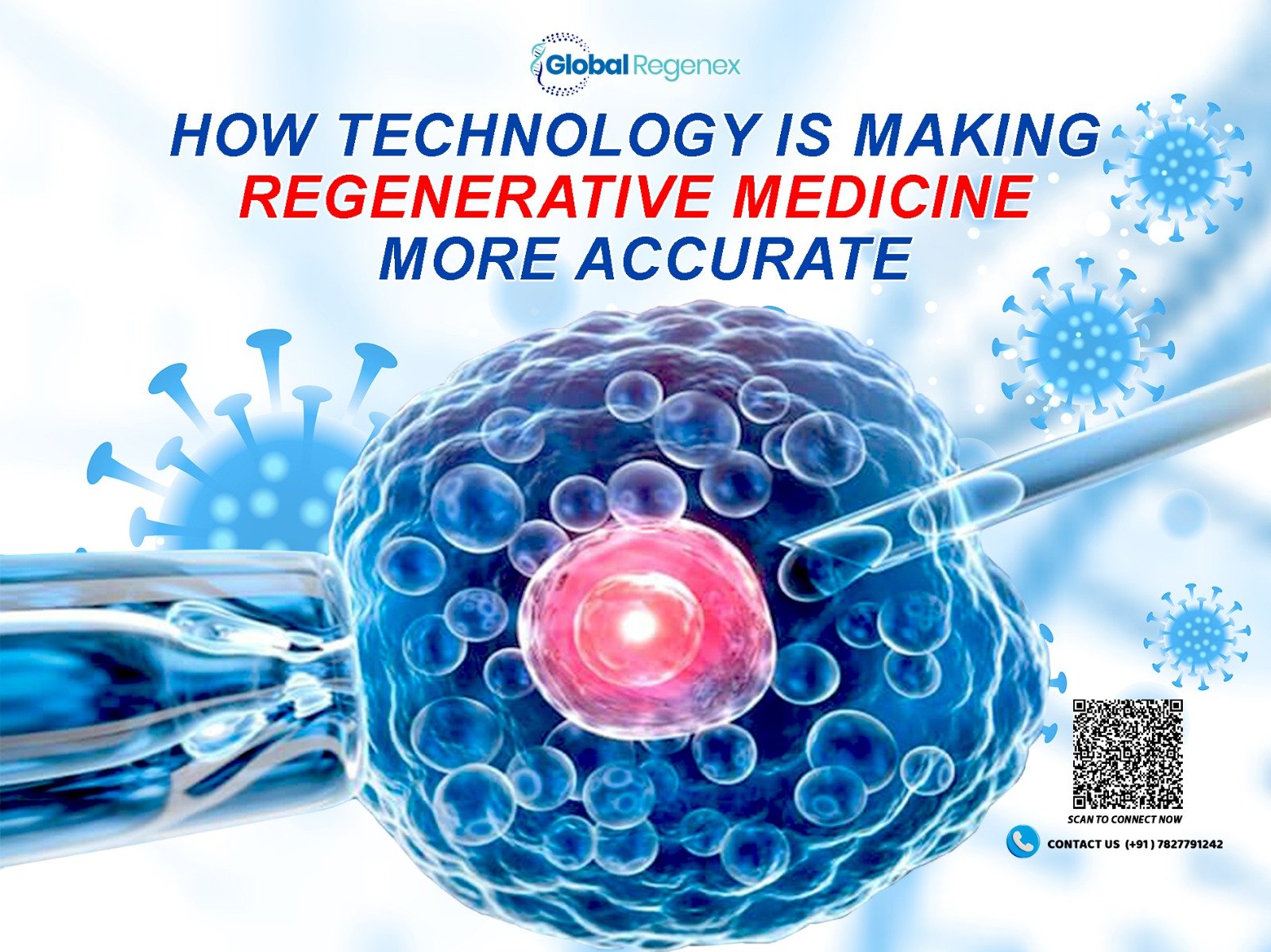
Summary: Technology is indeed transforming regenerative medicine driving a more accurate diagnosis, personalising treatments, and tracking real-time progress. Utilizing data analytic tools, imaging tools, and AI for better well being of the patient.
Most people often wondered how doctors know whether treatment is actually working inside the patient’s body? To shine a light on regenerative medicine, this question becomes important. Patients choosing treatment like stem cell therapy often look to repair damaged tissue, but for them to be more effective doctors need accurate information about the patient’s condition and recovery cycle.
This is where modern technology changes the regenerative medicine field, facilitating doctors with advanced diagnostic tools to artificial intelligences. Technology is helping both doctors and researchers understand how the human body works in far more detail and tailoring personalized treatment for patients with different conditions. Let’s look at how different technologies are making regenerative medicine more accurate and personalized.
Precision Diagnostics in Regenerative Medicine
Traditionally, every treatment session begins with a proper diagnosis. With accurate diagnostics tests and reports help regenerative medicine experts find the root cause of the condition and how damage it has caused. Modern medicine follows the same sophisticated diagnostic equipment to gain a good understanding of a patient’s health.
- Biomarker Testing: These tests can measure blood markers that signify the presence of inflammation, cell damage, or disease progression.
- Genetic Screening: Some diseases are caused by genetics. This information enables the doctor to provide a better treatment plan.
- Advanced Laboratory Analysis: These tests measure the state of the cells before any regenerative therapy is administered.
Doctors can provide regenerative therapy with more assurance when they have a more accurate understanding of the human body.
Data Analytics and Its Role in Treatment Outcomes
Top healthcare often has a huge amount of information such as patient records, imaging reports, labs results, and treatment outcomes. With data analytic tools regenerative experts utilize this information for better treatment.
Rather than rely on experience, experts can now study patterns across many other cases. Data analytics helps in several ways:
- Understanding the percentage of patients who are successfully treated
- Determining based on data which therapies are most effective for the different conditions
- Adjusting treatment accordingly by referring to actual patient results and records
This means regenerative medicine can gradually become more evidence-driven and accurate.
Wearable Technology for Monitoring Regeneration Progress
People, nowadays, use smart watches and other devices to monitor everyday health progress. For patients undergoing regenerative therapies, these devices provide useful insights into recovery.
Doctors can track things like:
- Physical activity levels
- Sleep quality
- Heart rate patterns
- Mobility improvements
Doctors can monitor patients in real time, rather than waiting for the next hospital visit. This ensures that treatment plans can be adjusted if necessary.
Machine Learning Algorithms in Patient-Specific Therapy
Machine learning is a type of artificial intelligence that assists computers in analyzing large amounts of information and recognizing patterns.
In regenerative medicine, machine learning is also being researched to assist doctors in creating more personalized therapies.
Machine learning systems may help doctors:
- Predict how patients may respond to stem cell therapy
- Analyze complex medical information more efficiently
- Assist in research studies by recognizing patterns in patient treatments
By learning more about patients, machine learning systems may help doctors select therapies that are more appropriate for their individual needs.
The Use of Imaging Technologies in Tissue Repair
With imaging tools doctors can exactly pinpoint what is occurring in the body. This is particularly significant in the field of regenerative medicine, where the aim is to repair damaged tissue or cells in the patient’s body.
Several imaging techniques assist doctors in monitoring the healing process:
- Magnetic Resonance Imaging (MRI): This technique is effective for checking patient’s soft tissues, nerves, and cartilage.
- Ultrasound Imaging: This method helps the doctor to view the tissues in real time.
- Advanced Cellular Imaging:This technique is employed in the research field to analyze the behavior of the cells in the regeneration process.
These techniques assist the doctor in checking whether the healing process is proceeding as expected.
To Bring It All Together
With modern technologies, regenerative medicine has become more precise and personalized. From diagnostic to monitoring devices, helping both patient and doctors understand how the body is responding to the treatment and how well the body is healing. If you are looking for regenerative medicine, then Global Regenex can provide you with the guidance and consultancy you need.
Frequently Asked Questions
Q1. What is regenerative medicine?
Ans. Regenerative medicine is a medical approach that heals damaged tissues using advanced supportive treatment such as stem cell therapy.
Q2. How does technology help in the improvement of regenerative medicine treatments?
Ans. Modern technologies assist medical expert diagnosis patients properly and provide a tailored treatment based on their condition. Additionally, evaluating after care progress of the patient.
Q3. How does artificial intelligence help in the practice of regenerative medicine?
Ans. Artificial intelligence uses large medical data sets and identifies patterns that can help medical practitioners develop customized regenerative medicine treatments.
Q4. Can wearable devices help track recovery after treatment?
Ans. Yes, wearable technology can help medical practitioners in evaluating the progress of patients using various health indicators such as the rate of activity and the rate of heartbeat.
Q5. Why are imaging technologies important in regenerative treatments?
Ans. Imaging technologies help medical practitioners in evaluating the progress of patients and determining if the regenerative medicine treatment is effective in the healing process.
Reference Links
Precision medicine and regenerative medicine integration
https://pmc.ncbi.nlm.nih.gov/articles/PMC7288190/
Artificial intelligence in regenerative medicine
https://pmc.ncbi.nlm.nih.gov/articles/PMC7864893/
Wearable technologies in healthcare monitoring
https://pmc.ncbi.nlm.nih.gov/articles/PMC7506577/
Imaging technologies in regenerative medicine
Categories
- Alpastic Anemia
- Amyotrophic Lateral Sclerosis
- Articles
- Autoimmune Disease
- Autoimmune Disorders
- Autologous
- Autologous Stem Cell Transplant
- Blog
- blogs
- Bone Marrow
- Bone Marrow Transplants
- Brain Injury
- Cancer Immunotherapy
- Diabetes
- Diabetic
- Exosome Therapy
- Exosomes
- Eye Damage
- Glaucoma
- Hearing Loss
- Immunotherapy
- Joint Replacement
- Kidney
- Knee Injuries
- Lung Cancer
- Lymphoma
- Orthopedic
- Osteoarthritis
- Pancreatic
- Parkinson’s Disease
- PRP
- PRP Treatment
- Regenerate
- Regenerative Medicine
- Spinal Cord
- Stem Cell Therapy
- Stem Cell Therapy for Eye
- Stem Cell Transplants
- Stem cell treatment
- Stem Cell Treatment Patient Stories
- Stroke
- Supplements
- Tourism