
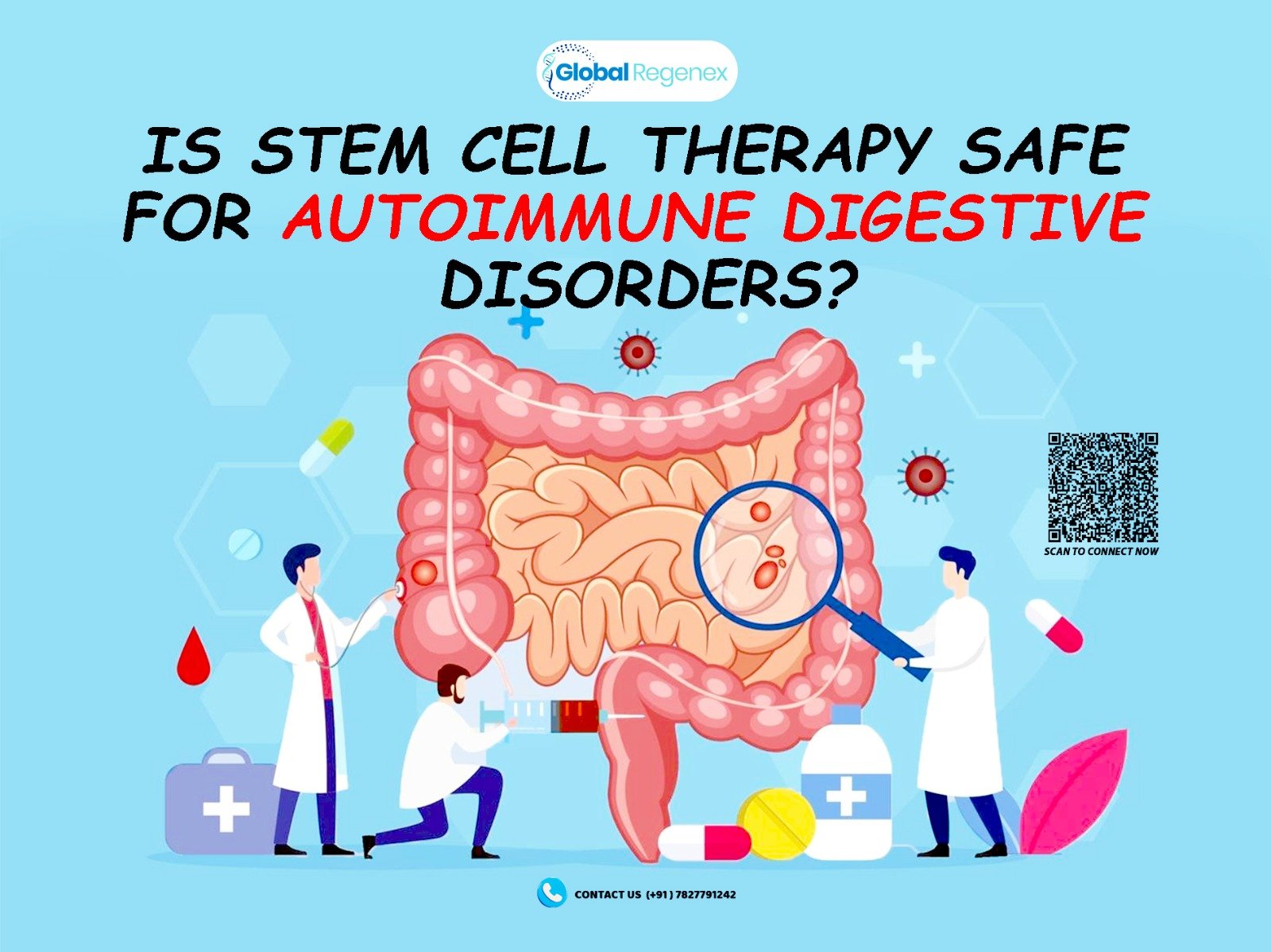
Summary: Exploring whether stem cell therapy is safe for autoimmune digestive disorders. Read this blog to understand how far research has come, what treatment involves, and why it is still being practiced under strict clinical environment.
Suffering from an autoimmune digestive disorder is hard. As this condition doesn’t show up in the same way in every patient. This makes detecting this condition challenging. While in some cases, people tend to feel a consistent discomfort and unpredictable inflammations. And for others, it can easily influence nutrition, energy levels and everyday routine in a way you can easily notice.
Sometimes, conditions like Crohn’s disease can be treated through medication and long-term treatments. Even then, symptoms start to stay presistent despte of the treatment. It is natural for people and families to look for other treatment areas, like regenerative medicine, that are currently being studied.
Due to potential of stem cells, researchers have started to explore and discuss the possibility of future treatment. For patient, it is important to know exactly how process works—and where research stands at present—which will help the patient decide if it is worth pursuing.
Overview of Autoimmune Digestive Disorders
Autoimmune digestive disorders often arise in patients—when the immune system in the body starts to mistakenly attack various parts of the digestive system. As a result, it triggers inflammation around the affected area in the body.
This may cause:
- chronic abdominal pain
- alterations in bowel movements
- tiredness and nutrition problems
Such disorders tend to be recurring in nature, where flare-ups alternate with periods during which their symptoms are relatively well-controlled. Given this reality, treatment tends to consist largely of anti-inflammatory care designed for long-term stability.
Mechanism of Stem Cell Therapy for Autoimmune Digestive Disorder
The reason for fascination with stem cells lies in their ability and are being studied for their potential role in influencing immune response and tissue repair. In simple terms, research involving stem cell therapy revolves around their role in modulating the immune system and tissue healing.
To get some information about autoimmune diseases in the digestive system, the question here are if these cells could be used:
- regulating inflammation markers
- modulating immune system functions
- promoting tissue repair
It should be kept in mind that we have only scratched the surface of their potential and that we cannot predict their effects yet.
Types of Stem Cell Therapies for Digestive Health
After preliminary research, it seems regenerative medicine, such as stem cell treatment, is being actively explored in current research. In this case, we can explore various stem cell strategies used in cases of digestive disorders.
Mesenchymal Stem Cells (MSCs): This treatment strategy has been extensively studied because of its potential application to regulate the immune response and inflammation.
Hematopoietic Stem Cell Treatment (HSCT): For certain diseases, this treatment has already been used clinically for regulated disorders related to blood abnormalities.
Other Cell-based Treatments: There is another set of treatments that has become popular, although they are currently undergoing research in many instances.
Overall, there are several differences between these treatments based on their application and objectives. Nevertheless, it should be noted that all of these treatments remain experimental and are still under clinical trials.
Safety and Efficacy of Stem Cell Treatments
When considering any new treatment, one thing that remains every patient’s priority is—how safe is the treatment? Safety and effectiveness are key areas being evaluated in research.
In the context of stem cell treatment, so far, research studies show results that remain inconsistent and vary from patient to patient. For some patient in clinical settings have experienced improvement in symptoms, while others have not.
Additionally, some factors that may influence safety and efficiency include:
- differences in patient conditions
- differences in treatments
- lack of long-term study
Therefore, due to these reasons, the treatment remains under observation for its efficacy and safety. For this reason, the therapy is not commonly used.
Regulations and Approval Status of Stem Cell Therapies
For every patient considering stem cell treatment as a supportive option for their condition, this is a matter that needs to be clarified well before undertaking the treatment.
The stem cell therapy for autoimmune diseases of the gastrointestinal tract in India is presently classified as investigational and not as an approved method of therapy. The treatment can only be conducted through clinical trial processes guided by government regulations.
Final Verdict
Autoimmune digestive conditions need constant and careful attention. Although stem cell treatment is currently being researched for use in regenerative medicine, it is a developing field of treatment that has yet to gain acceptance into conventional medicine.
Knowing the potential and the constraints is essential prior to moving on to anything further. In the event that you are looking into such options, a consultation with Global Regenex would be very beneficial to your considerations.
Frequently Asked Questions
Q1. Why Do Autoimmune Digestive Disorders Behave Differently In Each Person?
These conditions are connected to the immune system, which often varies from patient to patient. Symptoms might be severe in some patients, while others can experience less severe symptoms.
Q2. What Makes Managing These Conditions Long-Term So Challenging?
Autoimmune digestive disorder becomes difficult to manage due to its recurring nature and constant flare-ups in the area, which need long-term adjustment.
Q3. Why Is There Interest In Stem Cell Research For These Disorders?
Scientists are studying stem cells’ potential to regulate immune system response and influence immune system response and inflammation. This is because autoimmune disorders arise due to an imbalance in the immune system.
Q4. What Should Patients Be Careful About When Reading Online Information?
Not every piece of information online about regenerative medicine reflects its true medical evidence. Some information may seem promising to the patient but lacks evidence-based support. It’s a must for patients to verify information with expert consultants to clearly understand available options.
Reference Links
(1) Wang, S., et al. “Stem Cell Therapy for Inflammatory Bowel Disease: Mechanisms and Clinical Application.” Stem Cell Research & Therapy, 2020.
https://www.ncbi.nlm.nih.gov/pmc/articles/PMC7356930/
(2) U.S. National Library of Medicine. “Stem Cell Therapy in Inflammatory Bowel Disease.” ClinicalTrials.gov, Ongoing.
https://clinicaltrials.gov/search?cond=inflammatory+bowel+disease+stem+cell
(3) Wang, D., et al. “Stem Cell Therapy for Autoimmune Diseases: A Review.”
Frontiers in Immunology, 2019.
Categories
- Alpastic Anemia
- Amyotrophic Lateral Sclerosis
- Articles
- Autoimmune Disease
- Autoimmune Disorders
- Autologous
- Autologous Stem Cell Transplant
- Blog
- blogs
- Bone Marrow
- Bone Marrow Transplants
- Brain Injury
- Cancer Immunotherapy
- Diabetes
- Diabetic
- Exosome Therapy
- Exosomes
- Eye Damage
- Glaucoma
- Hearing Loss
- Immunotherapy
- Joint Replacement
- Kidney
- Knee Injuries
- Lung Cancer
- Lymphoma
- Orthopedic
- Osteoarthritis
- Pancreatic
- Parkinson’s Disease
- PRP
- PRP Treatment
- Regenerate
- Regenerative Medicine
- Spinal Cord
- Stem Cell Therapy
- Stem Cell Therapy for Eye
- Stem Cell Transplants
- Stem cell treatment
- Stem Cell Treatment Patient Stories
- Stroke
- Supplements
- Tourism