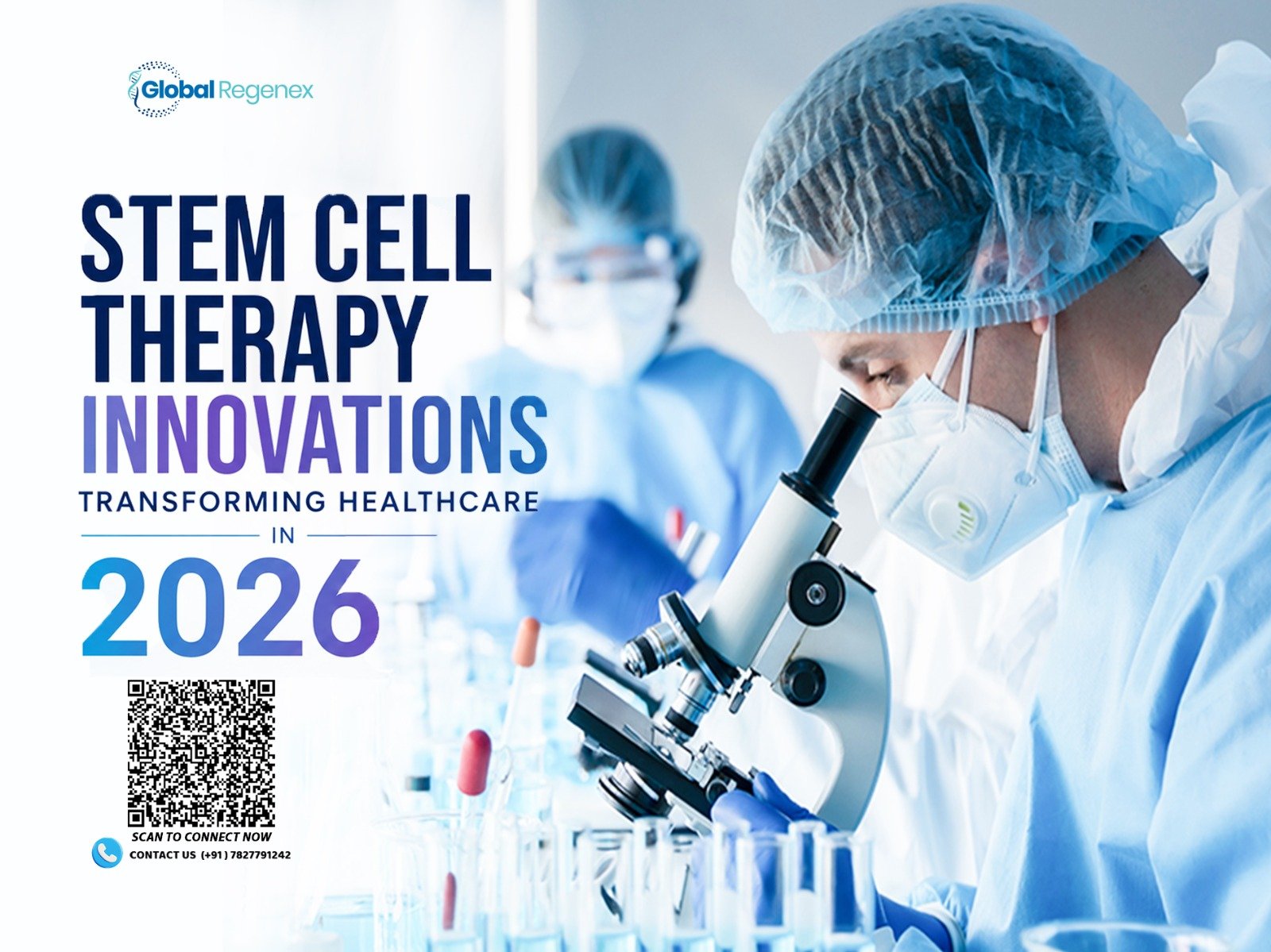
Summary: Regenerative medicine is evolving rapidly in 2026 as stem cell research, AI integration, and biotechnology innovation continue transforming personalized healthcare, tissue repair, and future treatment possibilities across multiple medical and scientific fields worldwide.
Modern healthcare is undergoing an accelerated change with stem cell therapy paving the way towards repairing injured tissue and addressing many conditions. In the year 2026, there will be another important milestone when it comes to the development of stem cell therapy. It will be associated with the acceleration of investments, advancements in research due to AI, and the increasing popularity of this type of therapy among healthcare providers.
In general, nowadays healthcare institutions tend to pay increased attention to personalized treatment plans that could provide better results and long-term health management. Based on the current market tendencies, the growth in the global regenerative medicine market is expected to increase significantly due to the rising demand for personalized healthcare services.
Major Stem Cell Therapy Innovations in 2026
The era of innovation for the regenerative medicine sector will come to fruition in 2026 through improvements in AI, biotechnology, and precision health care. Scientists and health care organizations are working towards creating innovative stem cell treatments that will be able to effectively target tissue repair and chronic diseases in patients.
AI-Based Stem Cell Research
- Advances in AI technologies can make the process of analyzing the actions of stem cells and their treatments more accurate.
- Machine learning technologies can increase efficiency in the development of drugs and regenerative medical treatments.
- Automation of labs will allow scientists to develop treatments for patients more effectively.
Patient-Centric Stem Cell Treatments
- Patient-specific treatments have become an essential element of precision medicine.
- Custom regenerative methods may decrease the risk of rejecting treatment.
- Medical institutions are concentrating on developing personalized treatments.
Gene Editing in Combination With Stem Cells
- CRISPR technology holds a lot of promise for regenerative medicine.
- The scientific community is looking into using gene editing to correct genetic issues.
- It is imperative to adhere to ethical guidelines and regulations.
3D Printing and Tissue Engineering
- Scientific investigations are focusing on using bioengineered tissues in the medical field.
- Tissue engineering might enable researchers to explore organ transplants in a new way.
- Biotechnology firms and hospitals are still interested in developing regenerative medicine.
Stem Cell Therapy Through Exosomes
- Research suggests that exosomes have regenerative properties.
- Scientists are analyzing their potential use in accelerating the recovery process.
Global Market Trends and Industry Growth
The global stem cell therapy market is poised to grow in 2026 as regenerative medicine becomes a topic of great interest for the healthcare providers, biotech companies, and research institutions. The growing need for precision and personalized medicine has encouraged the investments in stem cells and technology.
-
Global Stem Cells Market Prediction For 2026
The field of regenerative medicine is witnessing steady market growth owing to growing research and increasing awareness among healthcare organizations about the stem cell treatments.
-
Trends In Biotechnology Investment in 2026
Strong biotechnology investment trends are seen in 2026 as the pharmaceutical industry, venture capitalists, and healthcare organizations invest heavily in regenerative medicine innovations. AI-driven platforms and automation technologies have been making the process of developing drugs and stem cells faster.
-
Stem Cells Innovation Pioneering Nations
The nations at the forefront of stem cell innovation include countries like the United States, Japan, South Korea,India, and Germany. Moreover, other healthcare industries in Asia are flourishing due to government and private investments.
-
Healthcare Start-Ups and Innovations in Research Facilities
New healthcare start-ups and research facilities are concentrating on tissue engineering, personalized medicines, and regenerative medicine. Collaboration across nations between companies and hospitals has been ongoing regarding stem cell research.
Diseases Being Treated By Stem Cell Therapy
The use of stem cells in therapeutic treatment is being investigated for their possible use. In the field of regenerative medicine and healthcare applications, stem cell therapy is the best modern medical approach for positive results. Various scientists around the world are studying the possible ways in which stem cells can assist in the treatment of various diseases and provide a better quality of life. Many new therapies using stem cells are still being tested clinically, but the field has continued to grow at a rapid pace.
- Orthopaedic Conditions: Joint injuries, spinal cord injuries, osteoarthritis, sports injuries, etc.
- Neurological Disorders: Parkinson’s disease, stroke, cerebral palsy, etc.
- Anti-Aging: Cell regeneration, healthy aging research, major skin injuries, hair loss, etc.
- Organ Diseases: Liver, heart, kidney, lung, etc.
- Infertility: Male infertility and female infertility.
- Eye Problems: Optic nerve atrophy, glaucoma, retinopathy, retinitis pigmentosa, etc.
- Autoimmune Disorder: Rheumatoid arthritis, diabetes, lupus, etc
The Bottom Line
The application of stem cell therapy has continued to play a significant role in the evolution of regenerative medicine into the year 2026. Although some uses have yet to be confirmed clinically, more and more opportunities are being made available in the medical field because of increased global investment and scientific discoveries.
The application of stem cell therapy has continued to play a significant role in the evaluation of regenerative medicine in 2026. Although some uses have yet to be confirmed clinically, more and more opportunities are being made available in the medical field because of increased global investment and scientific discoveries.
Question That Are Frequently Asked
Q1. What is CRISPR in Stem Cell Therapy?
Ans: CRISPR is a form of gene editing technique being studied for the purpose of fixing genetic defects as well as enabling advanced studies on regenerative medicine worldwide.
Q2. What are exosomes in stem cell therapy?
Ans: Exosomes are cell-free regenerative treatments that are currently being studied for tissue regeneration, immune modulation, and recovery-based medical purposes.
Is stem cell therapy future medicine?
Yes, many people regard regenerative medicine as a promising field in medicine since research and innovations keep growing in various countries.
Q3. Is stem cell therapy future medicine?
Ans: Yes, many people regard regenerative medicine as a promising field in medicine since research and innovation keep growing in various countries.
Q4. Why do stem cells stand out in medicine?
Ans: The reason why stem cells stand out in medicine is that they can differentiate into specialized cell types and are used in regenerative medicine.
Q5. How does biotechnology help in stem cell therapy?
Ans: Biotechnology helps in stem cell therapy due to advanced laboratory procedures, artificial intelligence integration, tissue engineering, and precision medicine developments.
References
National Institutes of Health (NIH) — Basic overview of stem cells and regenerative medicine research.
NIH Stem Cell Basics
National Institutes of Health (NIH) — Explains stem cell functions, applications, and biomedical research importance.
Introduction to Stem Cells by NIH
U.S. Food and Drug Administration (FDA) — Consumer guidance on regenerative medicine and stem cell therapy safety.
FDA Regenerative Medicine Information
U.S. Food and Drug Administration (FDA) — Safety information about stem cells and exosome-based regenerative products.
FDA Consumer Alert on Stem Cells and Exosomes
World Health Organization (WHO) — Ethical guidance and governance for human genome editing technologies globally.
WHO Human Genome Editing Overview
World Health Organization (WHO) — Official recommendations for responsible genome editing research and clinical oversight.
WHO Human Genome Editing Recommendations
Categories
- Alpastic Anemia
- Amyotrophic Lateral Sclerosis
- Articles
- Autoimmune Disease
- Autoimmune Disorders
- Autologous
- Autologous Stem Cell Transplant
- Blog
- blogs
- Bone Marrow
- Bone Marrow Transplants
- Brain Injury
- Cancer Immunotherapy
- Diabetes
- Diabetic
- Exosome Therapy
- Exosomes
- Eye Damage
- Glaucoma
- Hearing Loss
- Immunotherapy
- Joint Replacement
- Kidney
- Knee Injuries
- Lung Cancer
- Lymphoma
- Orthopedic
- Osteoarthritis
- Pancreatic
- Parkinson’s Disease
- PRP
- PRP Treatment
- Regenerate
- Regenerative Medicine
- Spinal Cord
- Stem Cell Therapy
- Stem Cell Therapy for Eye
- Stem Cell Transplants
- Stem cell treatment
- Stem Cell Treatment Patient Stories
- Stroke
- Supplements
- Tourism