
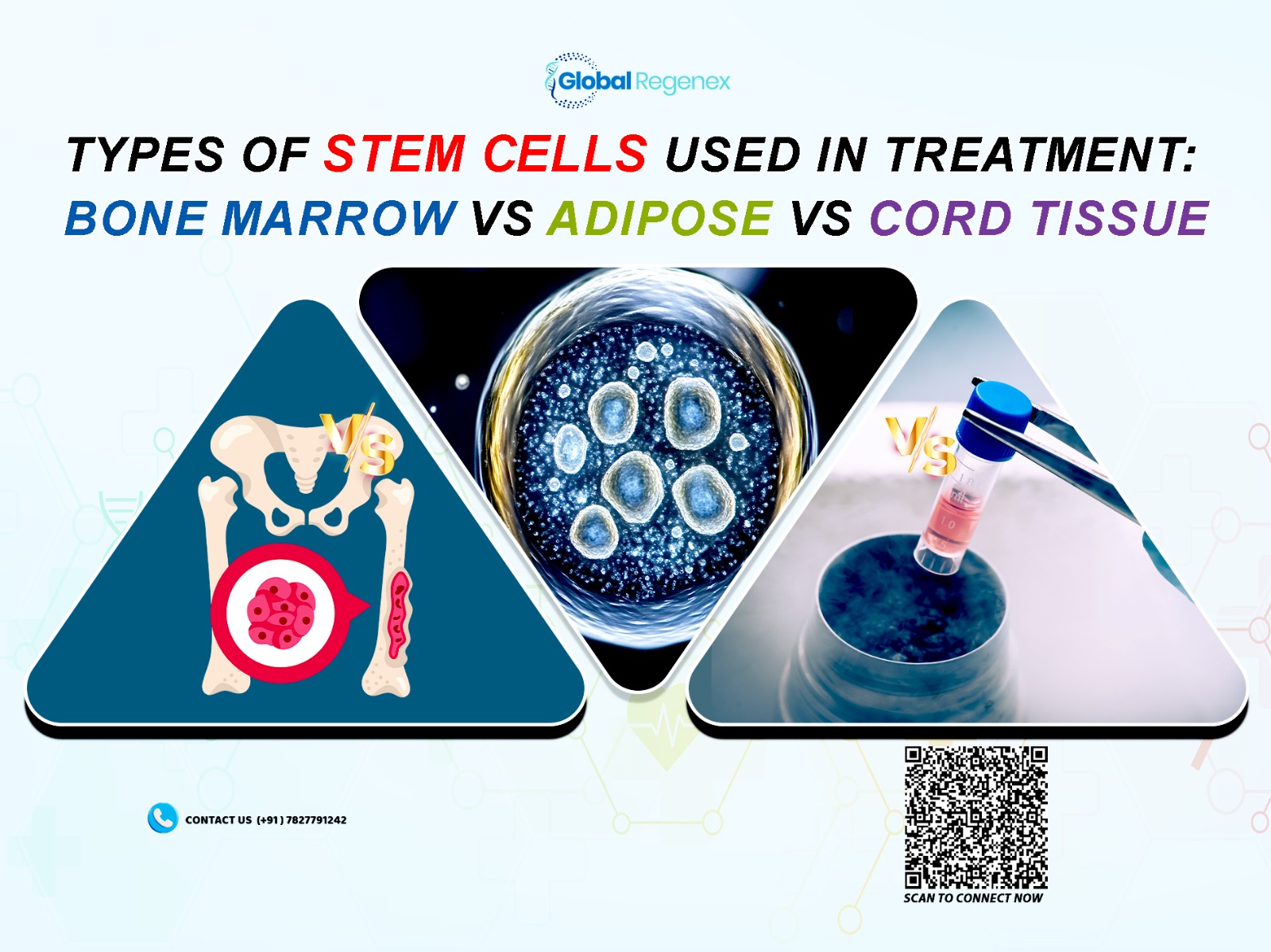
Summary: Stem cell therapy is advancing regenerative medicine through tissue repair, immune modulation, and clinical research. Different stem cell sources, including MSCs and umbilical cord cells, continue supporting evidence-based therapeutic applications in modern healthcare.
In today’s world of medicine, regenerative medicine practices are becoming more popular due to their ability to restore and regenerate human tissue that has been harmed. Regenerative medicine is concerned with the treatment and restoration of health conditions by restoring and regenerating human cells, tissues, and organs using biological procedure instead of surgical replacement
The application of stem cell therapy is common because of the capability of stem cells to become specific cells and participate in the natural repair process. Recently, stem cell therapy has been shifting from experimentation to evidence-based practice based on controlled trials and regulatory guidance.
Understanding Stem Cells: A Clinical Overview
Stem cells are described as undifferentiated cells that have the ability to reproduce and become other types of differentiated cells. They are very important in medical practice because they have the potential to help in the process of tissue repair and regeneration, and they can even modulate inflammatory responses. These are some of the reasons why stem cells are highly researched and sought after in regenerative medicine.
Examples of common stem cells utilized for treatment purposes are adult stem cells, perinatal stem cells, and mesenchymal stem cells (MSCs). While adult stem cells can be derived from bone marrow or fat tissue, perinatal stem cells are extracted from umbilical cord tissues. On the other hand, mesenchymal stem cells are extensively investigated because of their regenerative anti-inflammatory, and immune-modulating effects.
Stem Cells That Has Been Used in Various Treatments
Use of stem cells in regenerative medicine has become more common because of research conducted and the types of stem cells available. Differentiating the types of stem cells used in regeneration is done based on regenerative potential, compatibility with tissues, and specific uses. In current medical research, researchers try to figure out how different stem cells could help in regenerating tissues and improving patients’ health through specific conditions. Below are some of the stem cells widely used in therapy:
- Induced Pluripotent Stem Cells: iPSCs are stem cells obtained from adult cells and reprogrammed to develop into different cell types. They are widely used in disease models.
- Mesenchymal Stem Cells: MSCs are commonly studied because of their anti-inflammatory, immunomodulating, and repair properties.
- Adipose Tissue Stem Cells: The former is defined by cells that are derived from adipose tissue and commonly used in research pertaining to orthopedic medicine and regenerative medicine.
- Umbilical Cords Stem Cells: The latter is defined by cells that are collected from umbilical cords right after birth and have low immunogenic properties and regeneration abilities.
- Bone Marrow Stem Cells: Bone marrow cells are commonly used in hematology as well as in bone marrow transplants because of their hematopoietic qualities.
Differentiate Between Bone Marrow Vs Adipose Tissue Vs Cord Tissue Stem Cells
| Feature | Bone Marrow Stem Cells | Adipose Tissue Stem Cells | Cord Tissue Stem Cells |
| Source | Bone marrow | Fat tissue | Umbilical cord tissue |
| Collection Method | Invasive aspiration procedure | Minimally invasive liposuction | Collected after birth |
| Cell Yield | Moderate | High | Moderate to high |
| Age Influence | Cell quality may decline with age | Less affected by aging | Young biological profile |
| Clinical Focus | Blood disorder and regeneration | Orthopedic and regenerative use | Immune modulation and tissue repair |
| Immunogenicity | Moderate | Low | Very low |
| Research Interest | Long-established | Rapidly growing | Increasing in regeneration medicine |
Safety, Ethics, and Regulatory Considerations in Stem Cell Therapy
Increased usage of regenerative medicine has made it crucial to maintain high levels of safety, ethics, and regulation in the practice of clinical medicine. The field of stem cell treatment is one of the fields that have seen tremendous developments within the recent past. This means that there is a need to regulate its responsible use in order to ensure the health of patients and maintain scientific integrity.
- Safety for Patients: The stem cell process needs to be performed in a qualified medical environment where there is an appropriate screening and monitoring process in place.
- Evidence-Based Practice: The clinical treatment that has scientific evidence and support is essential to increase credibility.
- Ethical Procurement of Cells: Stem cells need to be extracted using the right process involving the approval from the patient or donors themselves.
- Regulation Process: There are health regulations involved to ensure quality in laboratory processing, storage, and treatments.
- Risk Involved: There might be certain risks associated with the procedure including infections immunity reactions, or clinical effects.
Final Thoughts
Stem cell therapy is still influencing the future of regenerative medicine due to clinical investigations that enhance use of evidence-based approaches in treatments. Various types of stem cells, such as those from bone marrow, fat tissues, and umbilical cord tissue, have different biological characteristics that may be helpful in specific medical application.
Stem cell therapy requires that the selection of various types of stem cells be made based on their potential to help patients recover and their suitability within an ethical and regulated environment.
Questions That Are Frequently Asked
Q1. Why are stem cells relevant to regenerative medicine?
Ans: Since they have the potential of assisting with natural body healing mechanisms, tissue regeneration, and even immune system modulation in many clinically based applications.
Q2. What is the difference between bone marrow stem cells and fat-derived stem cells?
Ans: Bone marrow cells are studied extensively, whereas fat-derived stem cells have greater production rates and less invasive methods of collection.
Q3. Are stem cells collected from the umbilical cords obtained in an ethical manner?
Ans: Yes, stem cells from umbilical cords are obtained post-birth via legal procedures with informed consent of parents.
Q4. Are all treatments involving stem cells scientifically validated?
Ans: No, not all treatments have full scientific proof, hence the need for further clinical studies.
Q5. Where do we obtain stem cells for treatment purposes?
Ans: They may be acquired through bone marrow, adipose tissue, peripheral blood, or umbilical cord tissue.
____________________________________________________________________________
References
FDA – Regenerative Medicine Consumer Information
Explains stem cell therapy regulations, risks, approved uses, and patient safety guidance.
FDA – Consumer Alert on Stem Cells and Exosomes
Provides official guidance about unapproved regenerative medicine and stem cell products.
NIH – Introduction to Stem Cells
Basic overview of stem cells, regenerative medicine, and therapeutic research applications.
https://stemcells.nih.gov/info/basics/?.com
NIH – Stem Cell Basics
Defines pluripotent and adult stem cells used in biomedical research today.
https://stemcells.nih.gov/node/16?.com
NCBI – Mesenchymal Stem Cells Overview
Scientific classification and characteristics of mesenchymal stem cells used clinically.
https://www.ncbi.nlm.nih.gov/mesh/68059630?.com
FDA – Focus Area: Regenerative Medicine
Discusses regenerative medicine technologies, regulatory oversight, and safety evaluation processes.
NIGMS – What Are Stem Cells?
Explains stem cell functions, differentiation ability, and role in tissue maintenance.
https://www.nigms.nih.gov/biobeat/2024/11/what-are-stem-cells?.com
Categories
- Alpastic Anemia
- Amyotrophic Lateral Sclerosis
- Articles
- Autoimmune Disease
- Autoimmune Disorders
- Autologous
- Autologous Stem Cell Transplant
- Blog
- blogs
- Bone Marrow
- Bone Marrow Transplants
- Brain Injury
- Cancer Immunotherapy
- Diabetes
- Diabetic
- Exosome Therapy
- Exosomes
- Eye Damage
- Glaucoma
- Hearing Loss
- Immunotherapy
- Joint Replacement
- Kidney
- Knee Injuries
- Lung Cancer
- Lymphoma
- Orthopedic
- Osteoarthritis
- Pancreatic
- Parkinson’s Disease
- PRP
- PRP Treatment
- Regenerate
- Regenerative Medicine
- Spinal Cord
- Stem Cell Therapy
- Stem Cell Therapy for Eye
- Stem Cell Transplants
- Stem cell treatment
- Stem Cell Treatment Patient Stories
- Stroke
- Supplements
- Tourism