
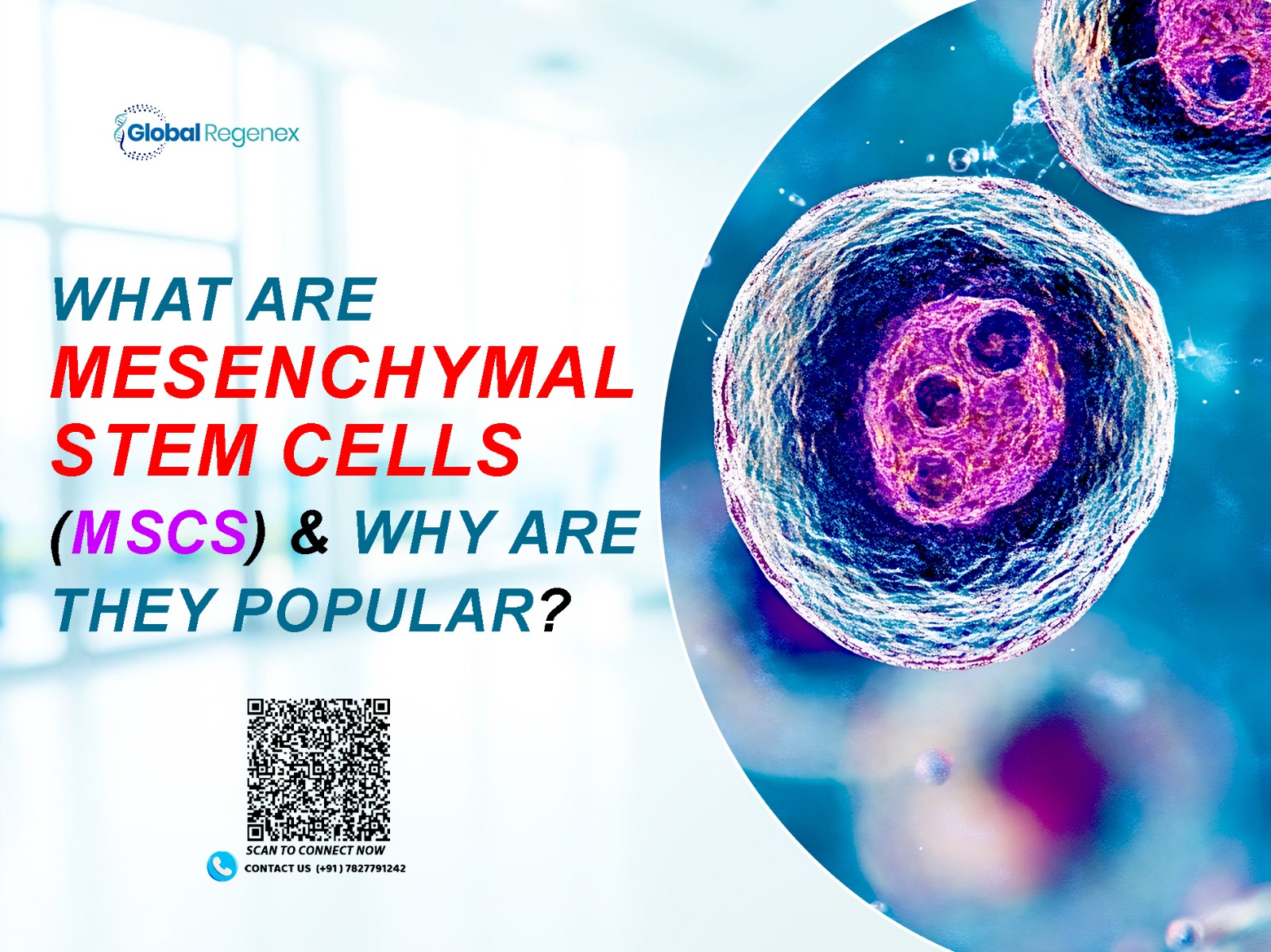
Summary: Mesenchymal Stem Cells (MSCs) are widely researched for tissue repair, immune modulation, and regenerative medicine applications. Ongoing studies continue evaluating their safety, effectiveness, and therapeutic potential across multiple medical conditions worldwide.
The field of contemporary regenerative medicine has opened up many doctors into scientific inquiry on the body’s capacity to heal itself. Scientists have become quite interested in stem cells because of the potential that they possess in assisting in the recovery of tissues and reduction of inflammation within the body.
Among the various kinds being studied, some adult stem cells are extensively researched in relation to orthopaedics. Autoimmune diseases, and degenerative conditions. They keep investigating them based on their safety, efficacy, and other long-term effects on patients. Research is still going on, and all stem cell treatments have not been approved by the FDA yet.
Brief Explanation of Mesenchymal Stem Cells
Mesenchymal Stem Cells (MSCs) are adult stem cells that typically arise from bone marrow, adipose tissues, and umbilical cord tissues. These stem cells are widely researched by scientists for their remarkable biological characteristics. The self-renewing capacity is a major characteristic of MSCs.
In simple terms, MSCs have the ability to grow and renew their cells indefinitely. The cells can also undergo differentiation, making them change into specialized cells such as none, cartilage, and adipose cells. Other notable characteristics of MSCs include their immunomodulatory effects. Although this theory is still under research. Not all stem cell treatments have been approved by the FDA.
How Do They Work In the Body?
Mesenchymal stem cells (MSCs) have been extensively studied for regenerative therapies based on how they can interact with the body’s self-repair and immune response system. Rather than replacing damaged cells, mesenchymal stem cells rely primarily on biological signaling and communication to influence the healing process.
- Repair Tissue Signaling: The cells produce signaling substances that may be able to trigger the body’s natural self-healing mechanisms in the case of injury or inflammation.
- Anti-Inflammation: Studies show that mesenchymal stem cells may have the ability to reduce inflammation in particular tissues by modulating the behaviour of immune cells.
- Cell-to-Cell Signaling: Mesenchymal stem cells communicate with other cells using chemical signaling.:
- Immunomodulation: These cells may have immunomodulating abilities which means they might be able to regulate the body’s immune response in a certain situation.
- Produce Growth Factors: Mesenchymal stem cells secrete growth factors that may affect tissue repair, vascularization, and cellular processes.
Why Are Mesenchymal Stem Cells So Popular?
Mesenchymal stem cells have emerged as one of the most extensively investigated topics in the field of regenerative medicine and cellular therapy. The rising popularity of mesenchymal stem cells is associated with the increase in scientific investigations, clinical studies, and the interest shown by the general public in medical science. Guidance and research regarding the safety of stem cell therapies continues to be provided by many organizations. Here why they are so popular nowadays:
- Minimal Invasiveness
- Mesenchymal stem cells can be harvested through minimally invasive techniques from the bone marrow, fat tissues, or umbilical cord tissue.
- They provide more flexibility as compared to other cell types for use in scientific research and investigations.
- Highly Motivated Research Interest
- Over thousands of peer-reviewed journal articles focusing on MSCs have been published on PubMed.
- The researchers remain highly interested in their behaviour, safety, and medical application potential.
- Promising Potential in Regenerative Medical
- MSCS have been studied for various regenerative capabilities related to tissue regeneration, inflammation reduction, and immune modulation.
- The field of regenerative medicine is experiencing significant interest in the last decade,boosting investments in research.
- Less Ethical Problems Related to Embryonic Stem Cell Research
- Being the adult stem cells, MSCs are associated with fewer ethical issues than embryonic stem cell research.
- This has contributed to broader public and scientific acceptance.
- Wide Scope of Research Application
- Various MSC applications are under investigation in orthopaedics, auto-immune diseases, neurology, and cardiology.
- The number of related clinical trials has also increased throughout the years.
Current Research of MSCs in 2026
The studies on mesenchymal stem cells have continued to increase up to the year 2026, with the increased focus on regenerative medicine, immune-based diseases, and tissue regeneration. There have been increasing investigations of the use of MSCs in clinical trials for various conditions, including orthopaedics, cardiovascular conditions, autoimmune diseases, neurological studies, and other diseases.
Various studies conducted through PubMed and funded by the National Institutes of Health are focusing on the issues of safety, administration and dosages, and outcome measures in the use of MSCs. The United States Food and Drug Administration has been stressing the fact that most of the stem cell treatments still remain experimental and more studies are needed for approval.
In A Nutshell
The mesenchymal stem cells remain relevant as far as scientific research in the field of regenerative medicine is concerned because of their special biological features and popularity in the clinical realm. Despite various promising research projects that are being currently conducted, more investigation remains needed since not all stem cell therapies have been approved by the FDA.
Questions That Are Frequently Asked
Q1. Where are MSCs commonly found?
Ans: MSCs can be located in bone marrow, adipose tissue, umbilical cord tissue, and other connective tissues in the human body.
What can MSCs do?
MSCs interact with neighboring cells, produce growth factors, and could help facilitate the natural healing process and regulate the immune response.
Q2. What can MSCs do?
Ans: MSCs interact with neighbouring cells, produce growth factors, and could help facilitate the natural healing process and regulate the immune response.
Q3. Are stem cell therapy procedures FDA-approved?
Ans: Stem cell treatments are required by the FDA. However, there are numerous unregulated MSC treatments that have not been approved yet.
Q4. Are MSCs equal to embryonic stem cells?
Ans: Absolutely not. MSCs are adult stem cells and pose less ethical controversy than embryonic stem cells research procedures.
Q5. Is stem cell treatment a safe procedure?
Ans: Safety of this procedure depends on the specific treatment approaches and the individual’s conditions.
____________________________________________________________________________
References
PubMed – Mesenchymal Stem Cells and Regenerative Medicine
Reviews MSC functions, tissue repair mechanisms, and regenerative medicine applications.
PubMed MSC Regenerative Medicine Review
FDA – Consumer Alert on Regenerative Medicine Products
Explains FDA-approved stem cell therapies, safety concerns, and regulations.
FDA Stem Cell Consumer Alert
NIH – Regenerative Medicine Overview
Discusses regenerative medicine research and stem cell-based scientific advancements.
NIH Regenerative Medicine Overview
PubMed – Immunomodulatory Properties of Mesenchymal Stem Cells
Explains MSC immune regulation and anti-inflammatory biological properties.
PubMed MSC Immunomodulation Study
NIH – Regenerative Medicine Innovation Project
Supports stem cell clinical trials, research quality, and patient safety.
NIH Regenerative Medicine Innovation Project
Categories
- Alpastic Anemia
- Amyotrophic Lateral Sclerosis
- Articles
- Autoimmune Disease
- Autoimmune Disorders
- Autologous
- Autologous Stem Cell Transplant
- Blog
- blogs
- Bone Marrow
- Bone Marrow Transplants
- Brain Injury
- Cancer Immunotherapy
- Diabetes
- Diabetic
- Exosome Therapy
- Exosomes
- Eye Damage
- Glaucoma
- Hearing Loss
- Immunotherapy
- Joint Replacement
- Kidney
- Knee Injuries
- Lung Cancer
- Lymphoma
- Orthopedic
- Osteoarthritis
- Pancreatic
- Parkinson’s Disease
- PRP
- PRP Treatment
- Regenerate
- Regenerative Medicine
- Spinal Cord
- Stem Cell Therapy
- Stem Cell Therapy for Eye
- Stem Cell Transplants
- Stem cell treatment
- Stem Cell Treatment Patient Stories
- Stroke
- Supplements
- Tourism