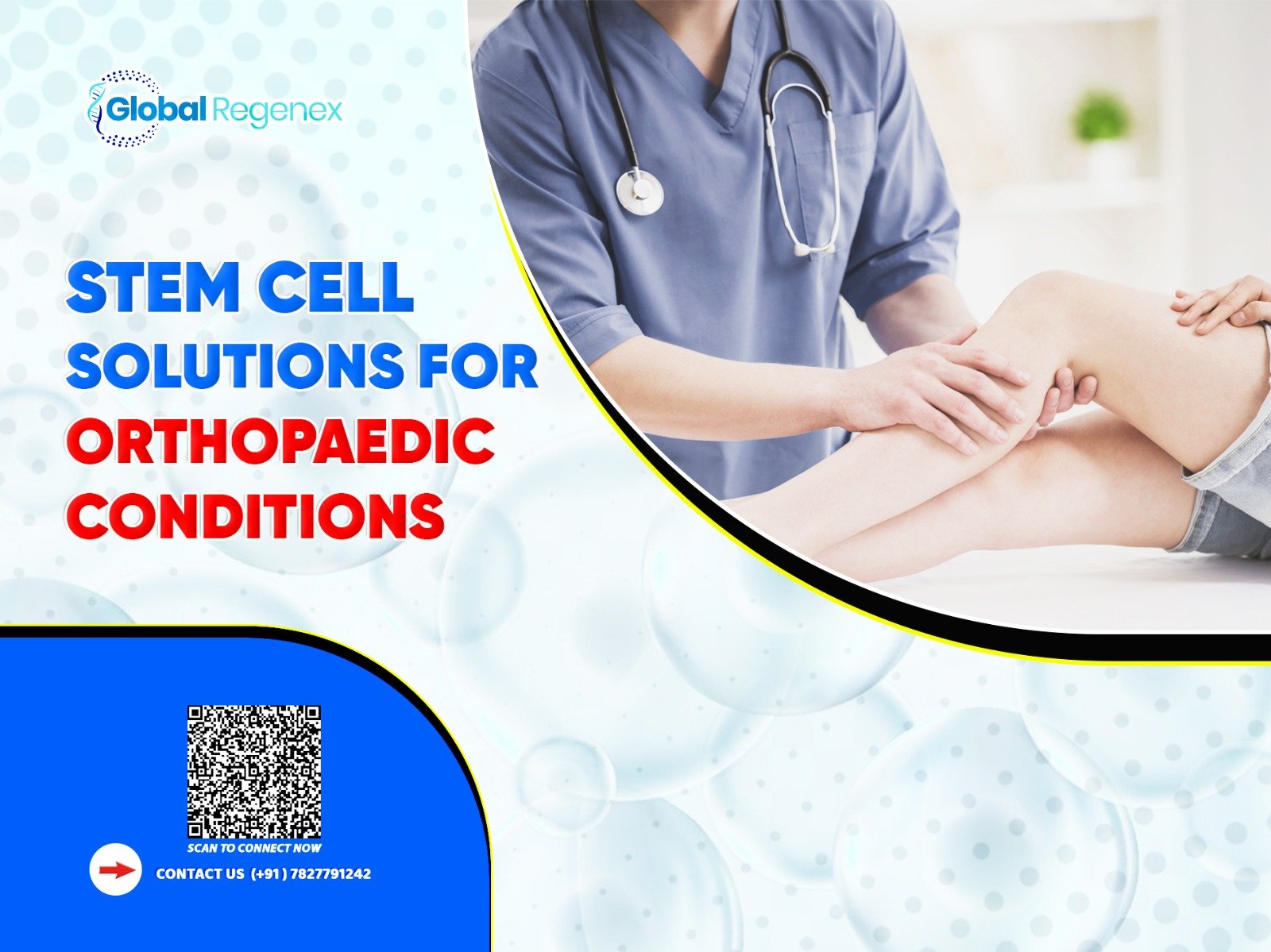
Summary: Stem cell therapy is becoming a dominant and attractive alternative to surgery for the treatment of various orthopaedic conditions such as arthritis, joint degeneration, ligament injuries, and chronic pain. As it facilitates the body’s own tissue repair, the therapy provides a sustained solution to the problem and enables patients to regain mobility.
For many people, living with joint pain or recurring orthopaedic problems means that even the simplest activities can be a challenge. Many people want more than temporary relief, but they seek a treatment that helps the body heal itself.
That is where stem cell therapy differs. It will treat the root cause, not mask pain, by renewing the tissues and bringing comfort back in a natural, supportive manner. Let’s keep reading to find out if stem cell therapy is the solution for your orthopaedic condition you were looking for.
Understanding Stem Cell Therapy
Stem cell therapy is a method that infuses the body with its own special repair cells, which then work to heal, soothe, and restore the injured area. The cells, to be specific, are capable of becoming healthy bone, cartilage, or muscle cells, but hence, they are the most ideal ones for solving joint and orthopedic problems of the nature,
How Stem Cells Help in Orthopaedic Recovery?
Here are some ways stem cells help in healing orthopaedic recovery:
- Repairing Damaged Joint Tissues
These are cells that support the growth of new cartilage, which is useful in restoring the cushioning effect within a worn-out joint, such as a knee or hip.
- Decreased Inflammation and Pain
They naturally calm inflammation, which therefore soothes painful stiffness without the use of long-term medication.
- Supporting Ligament and Tendon Healing
With injuries ranging from tears in the ACL or the rotator cuff to Achilles tendon issues, stem cells contribute to faster and stronger tissue repair.
- Improving Mobility and Strength
By restoring healthier tissues, patients will often regain movement, flexibility, and overall joint function.
- Surgical Delay or Avoidance
For many, the relief with stem cell therapy is enough to delay or avoid joint replacement or other invasive orthopaedic surgeries.
Conditions That Benefit From Stem Cell Therapy
Here are some conditions that can benefit from stem cell therapy:
Osteoarthritis
The encouraging use of stem cells rejuvenates cartilage, reduces swelling, and makes walking or climbing stairs much easier than before.
Sports Injuries
Whether it is a meniscus tear, ligament sprain, or muscle strain, stem cells support faster healing and help athletes return to activity with better joint stability.
Degenerative Disc Disease
Thus, they can help in disc hydration, soothing irritated nerves by reducing chronic back pain and stiffness over time.
Tendon and Ligament Disorders
Stem cells foster strong, natural tissue repair, but hence, conditions like rotator cuff injuries, tennis elbow, plantar fasciitis, and stubborn tendon pain usually respond quite well.
Post-Traumatic Joint Pain
After falls, accidents, or impact injuries, the process of recovery is enhanced by stem cells rebuilding injured tissues and reducing long-term discomfort.
Benefits of Stem Cell Therapy for Orthopaedic Care
Here are some benefits of stem cell therapy:
- Allows tissues to heal naturally: Stem cells support actual healing through the rebuilding of damaged cartilage, ligaments, and soft tissues.
- Reduces Pain and Inflammation: They soothe swollen joints and alleviate pain without resorting to long-term use of painkillers.
- Improves Mobility and Flexibility: As tissues heal, joints become more mobile and feel more stable during daily activities.
- Quicker Recovery with Minimal Downtime: Being minimally invasive, most patients return to their routine life much sooner than with surgery.
- Lasting Relief: Instead of just temporary symptom control, stem cells encourage long-term improvement and healthier joint function.
Stem cell therapy works with your body’s own healing power, helping you to move more comfortably and confidently again.
Why Many Patients Prefer Regenerative Treatments Over Surgery?
Surgeries are often costly, invasive, and may require a long period of recovery of several months. On the contrary, stem cell therapy is a less aggressive method and it will gradually make the patient able to regain the lost functions of strength and movement without any accompanying risks usually linked to major surgery.
Expert Guidance With Global Regenex
With so many different orthopaedic treatments available, it can become quite overwhelming. Global Regenex offers expert guidance in connecting patients with trusted regenerative specialists who are creating personalized plans tailored for each condition.
Their patient-first approach ensures clarity, safety, and confidence at every step along the healing journey.
The Concluding Thoughts
Stem cell therapy is the future in the treatment of orthopaedic problems, as it promotes natural healing, reduces pain, and offers long-term improvement without the need for major surgery.
If you are exploring regenerative solutions for joint or bone conditions, take a step toward a healthier and pain-free life with trusted, tailored support from Global Regenex.
FAQs
Q1. Can stem cells regrow cartilage?
Ans. They can facilitate the growth of new cartilage and, hence, can improve cushioning within the joints and reduce pain.
Q2. Is stem cell therapy safe to treat orthopaedic conditions?
Ans. Yes, when performed at accredited medical centers with proper protocols and trained specialists.
Q3. How long until results appear?
Ans. Most patients observe gradual improvement within weeks and even better over a few months.
Q4. Does it postpone joint replacement surgery?
Ans. In most cases, yes, it can reduce symptoms enough to delay or even avoid surgery.
Reference Link
Gadelkarim M. et al. (2022). Safety and efficacy of adipose-derived mesenchymal stem cells for knee osteoarthritis: A systematic review and meta-analysis. https://doi.org/10.1016/j.jbspin.2022.105404
Lamo-Espinosa JM et al.
Intra-articular MSC injections for knee osteoarthritis – Randomized controlled trial.
https://pubmed.ncbi.nlm.nih.gov/28961506/
Journal of Clinical Medicine (MDPI)
Clinical outcomes of MSC therapy in knee osteoarthritis.
https://www.mdpi.com/2077-0383/9/11/3412
Gadelkarim M et al., 2022
Safety and efficacy of adipose-derived MSCs for knee OA – Systematic review.
https://stemcellres.biomedcentral.com/articles/10.1186/s13287-022-02805-3
Jo CH et al.
MSC treatment for rotator cuff tears improves healing.
https://pubmed.ncbi.nlm.nih.gov/27825735/
Frontiers in Immunology
Anti-inflammatory mechanisms of MSCs in chronic musculoskeletal pain.
https://www.frontiersin.org/articles/10.3389/fimmu.2020.02041/full
Bianco P et al.
Clinical safety profile of mesenchymal stem cell therapy.
https://stemcellres.biomedcentral.com/articles/10.1186/s13287-016-0343-5