Table of Contents
Summary: Finding the right regenerative medicine clinic for your condition needs careful research. Learning therapies, expertise and clinical credibility helps patients make the rightful decision for better well being.
When people dealing with different types of disorders or degenerative conditions hear about advanced treatment like regenerative medicine, the first thought in their mind is often hope. The idea of repairing and regenerating damaged tissues for healing using advanced medical techniques seems promising. Treatments like stem cell therapy and other regenerative medicine are being researched for conditions involving joints to neurological disorders.
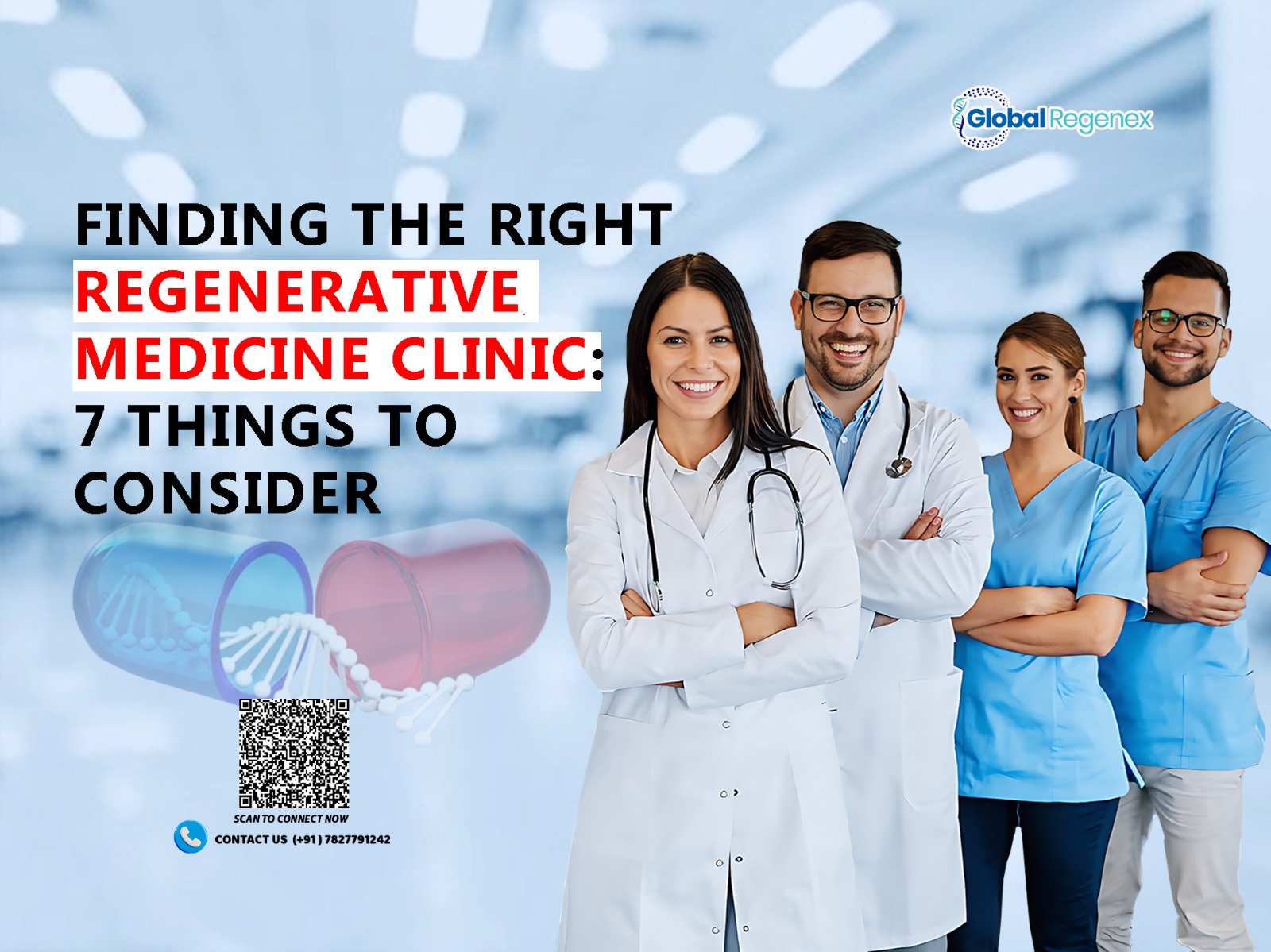
However, with growing interest comes high demand which leads patients to ask questions : how do you choose the right regenerative medicine clinic? Not each and every clinic follows the right procedure and safety standards, and patients often come across with a lot of confusing information. Understanding how regenerative medicine really works and what to look for in a regenerative medicine clinic can change your healing journey significantly.
What Is Regenerative Medicine?
As its heart of medical science, regenerative medicine often focuses on the body’s ability to heal itself. Unlike traditional treatments, regenerative medicine goes beyond just providing symptom-based relief. It promotes healing through repair and regenerate the damaged tissues in the body.
Some of the main concepts of regenerative medicine include:
- Healing of damaged tissues, as opposed to controlling the symptoms
- Promoting natural healing processes within the body
- Using biological treatments that promote regeneration of tissues
Regenerative medicine as a field of research includes conditions such as joint degeneration, neurological disorders, autoimmune disorders, and chronic conditions.
Common Types of Regenerative Therapies
As you begin your research on the topic of regenerative medicine, you will find that there are a number of different therapies that are talked about. Each of these therapies works to aid the body in its own natural healing processes.
Some of the more popular regenerative medicine therapies that are often discussed are as follows:
Stem Cell Therapy: This type of therapy works to use specialized cells to aid the healing process and combat inflammation in the affected areas.
Platelet-Rich Plasma Therapy: This type of therapy works to use platelets derived from the patient’s own blood to aid the healing and repair of the body.
Cell-Based Regenerative Therapies: This type of therapy works to stimulate the natural repair processes within the body.
Biologic Therapies: This type of therapy works to use biological materials to aid the regeneration and repair of the body.
Key Factors in Selecting a Regenerative Medicine Clinic
Regenerative medicines do give a ray of hope for patients with chronic diseases. However, deciding the treatment is only the first step of your healing journey. Choosing the right clinic is one of the most important steps when considering regenerative therapy. Here are some following factors to consider:
- Medical Qualifications and Licensing: The hallmark of a genuine clinic is one that is properly regulated medically and overseen by medical professionals.
- Experience in Regenerative Medicine: Facilities with a background of working with regenerative medicine are most likely well, versed with the knowledge and treatment protocols.
- Clear Communication Regarding the Treatment: A real clinic is one that informs comprehensively the treatment, the expected results, and the potential risks.
- Evidence-Based Approach: One should search for clinics that operate upon scientific research and findings.
- Proper Patient Evaluation: Typically, reputable clinics carry out medical evaluations prior to the recommendation of regenerative treatments to their patients.
- Safety and Sterility Standards: Regenerative therapies should always be done in medical environments and must comply with safety standards.
- Follow Up and Patient Monitoring: Therapy does not simply finish at the operation. Legitimate clinics must provide treatment follow ups for monitoring as one of the post care options.
By reflecting on these points, patients can better equip themselves with knowledge and safety when making healthcare decisions.
Credentials and Experience of Practitioners
Another important point that might help you in selecting a regenerative medicine clinic is the qualification of the medical team. For example, a regenerative medicine clinic really ought to have technically skilled personnel who understand cell biology and tissue regeneration.
When selecting a doctor for your regenerative medicine, here are the questions you should raise to yourself:
- Do they have recognised medical qualifications?
- Do they have experience in regenerative medicine treatments?
- Are they involved in clinical research or ongoing training?
Experienced regenerative medicine experts are probably going to adhere to safety protocols in medicine more strictly and they are likely to be quite reasonable when it comes to expectations of the treatment results
Putting It All Together
The process of looking for the right clinic for regenerative medicine involves a process of research and decision-making. It is always important to look for the right professionals who have the right knowledge, treatment, and advice. If you are looking for advice on the right option for regenerative medicine, consulting Global Regenex would be the right approach.
Frequently Asked Questions
Q1. What is the use of regenerative medicine?
Ans. Regenerative medicine is the process of promoting healing in the body through the process of repair and regenerating damaged tissues and cells through various methods such as stem cell therapy.
Q2. Is stem cell therapy a type of regenerative medicine?
Ans. Yes, stem cell therapy is a type of regenerative medicine that is widely studied for the purpose of tissue repair and healing.
Q3. How can I find the best clinic for regenerative medicine?
Ans. You can find the best clinic for regenerative medicine based on the qualification of the practitioners and the experience of the clinic.
Q4. Are regenerative medicine therapies widely accepted as treatment options?
Ans. Some are widely accepted, while others are still in the research and clinical trials phase.
Q5. Why is regenerative medicine considered a vital part of modern medicine?
Ans. Regenerative medicine is considered a vital part of modern medicine as it provides the best treatment options for the repair of damaged tissue.
Reference Links
Stem cell therapy in regenerative medicine
https://pmc.ncbi.nlm.nih.gov/articles/PMC7288190/
Advances in regenerative medicine
https://pmc.ncbi.nlm.nih.gov/articles/PMC7367472/
Stem cell therapy: current perspectives
https://pmc.ncbi.nlm.nih.gov/articles/PMC6121288/
Regenerative medicine overview