Table of Contents
Summary: Explore how stem cells research is advancing in helping in pancreatic cell regeneration. From insulin-beta cells to immune modulating, regenerative medicine is being studied to support the condition beyond the conventional treatments.
Diabetes is the most common disease, which affects millions of patients worldwide. Diabetes is commonly caused by the disturbance of insulin, either the body does not produce enough or the body cannot utilize it properly. Whereas the “pancreatic” plays a crucial role in the regulation of blood sugar levels by producing insulin.
However, when the “pancreatic beta cells” are damaged, the body fails to have the ability to control the glucose levels in the blood. The conventional method of treatment only helps in alleviating the symptoms but does not have any effect on repairing. Owing to this shortcoming, scientists are currently working on the concept of the ability of stem cells to repair and regenerate, which may help in regenerating “pancreatic cells” in the future. Although still in the initial stages, research on stem cell therapy is progressing rapidly, offering new perspectives. Let’s see how stem cells can help in diabetes.
Understanding Pancreatic Cell Damage
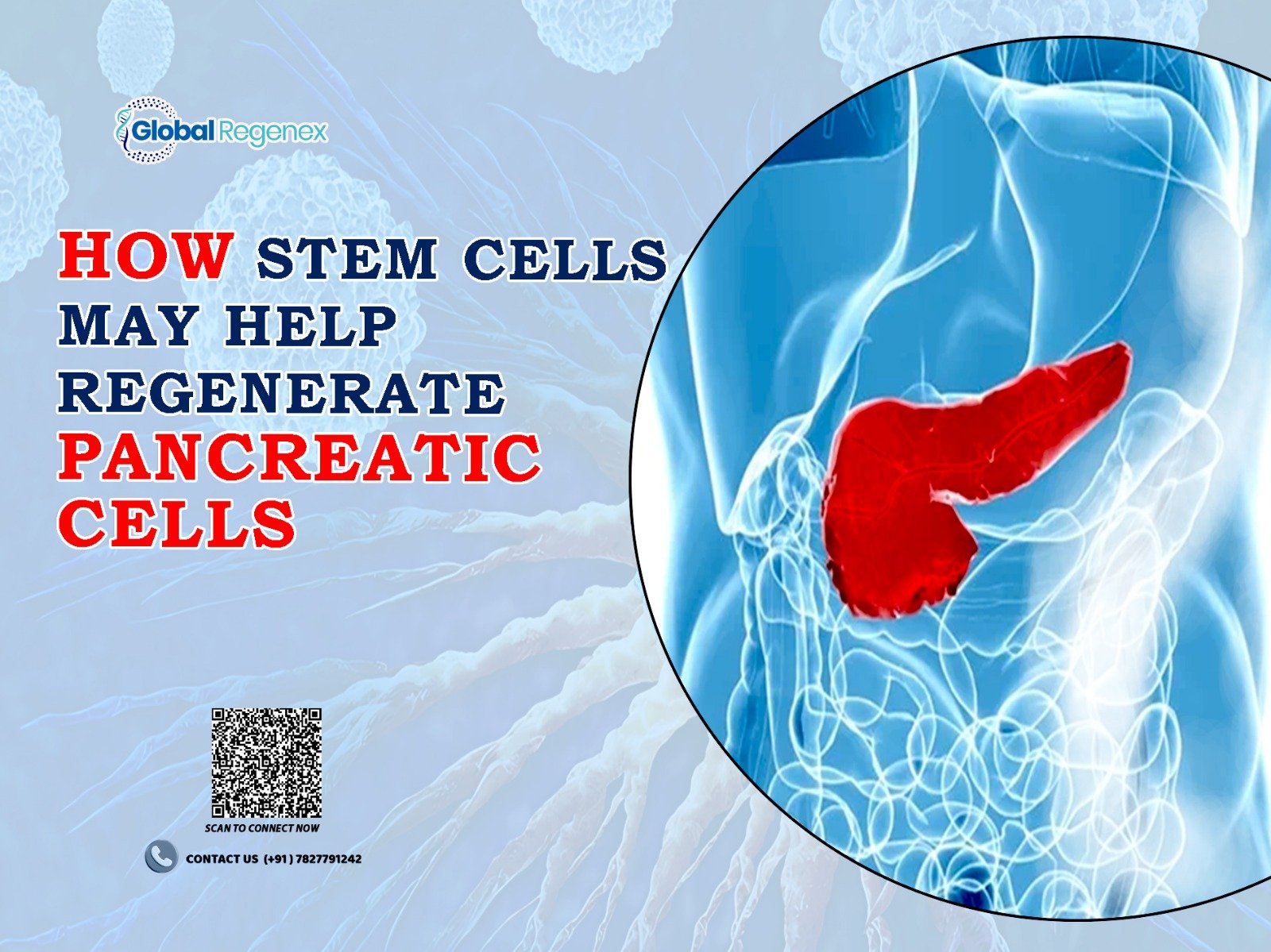
The pancreas is one of the organs that play a major role in regulating the concentration of glucose in the blood. It contains tiny clusters of cells known as the islets of Langerhans which harbor beta cells that secrete insulin.
Autoimmune destruction( Type 1 Diabetes): When your body’s immune system gets confused and destroys beta cells without producing insulin.
Chronic Insulin Resistance (Type 2 Diabetes): A prolonged state of cellular stress due to metabolic demands can lead to a loss of function and exhaustion of the beta cells.
Inflammation: Long term inflammation can gradually lead to the destruction of pancreatic tissue.
Genetic Predisposition: Some genetic components may predispose individuals to beta cell failure.
Thus, when the beta cells are highly depleted, the body cannot maintain the blood glucose level within the normal range.
What Is Pancreatic Regeneration?
The term pancreatic regeneration often refers to restoring and repairing the damaged beta cells and function so they can resume insulin production in the body.
This may include:
- Repairing damaged but viable beta cells
- Stimulating the growth of new beta cells
- Replacing dead cells with their functional counterparts
- Improving the microenvironment of the pancreas
Stem cell therapy has been considered as a potential avenue for the achievement of the above.
How Stem Cells May Support In Pancreatic Regeneration
As the medical research on stem cells has evolved rapidly. Scientists focus on stem cells’ ability to differentiate into various types of all cells that influence tissue repair. In pancreatic research, several mechanisms are still being studied.
Differentiate Into Insulin-Producing Cells
Certain stem cells are being studied in controlled labs, which may be used in developing into insulin-producing cells. These cells may help in replacing damaged pancreatic cells.
Secretion of Growth Factors
Stem cells release bioactive factors that will help the tissue to heal, reduce the inflammatory process, and also improve the functioning and living of the remaining beta cells.
Immunomodulatory Effects
Mesenchymal stem cells (MSCs) are capable of adjusting the immune system. In the case of Type 1 diabetes, this effect can prevent the immune system from attacking the pancreas.
Microenvironment Improvement
The stem cells carry the ability to modify the microenvironment of the pancreas so that it would support the metabolism and survival of the cells.
Types of Stem Cells Being Studied for Pancreatic Regeneration
As the research progresses in stem cells for diabetes. Different types of stem cells in the body are currently being investigated for their potential in pancreatic regeneration:
- Induced Pluripotent Stem Cells (iPSCs): These are cells reprogrammed from a patient’s somatic cells to a pluripotent state.
- Mesenchymal Stem Cells (MSCs): These cells are mainly considered in terms of their immunological and trophic effects.
- Umbilical Cord Stem Cells: Umbilical cord stem cells are mainly considered in terms of their regenerative and anti-inflammatory potential.
What Latest Research Says?
As of 2026, pancreatic regeneration studies are still in the early and mid-stages of clinical trials.
- Safety studies have shown promising results in terms of tolerability in a controlled setting.
- Stem cell-derived beta cell transplantation has resulted in the production of insulin in carefully selected patients.
- Some patients have shown a decrease in insulin requirements.
Durability and potential for immune rejection are still being assessed.
Need for Expert Advice
Stem cell therapy to regenerate the pancreas is still an experimental treatment, and the results depend on the patient’s condition. You must talk to specialists to understand the feasibility and risks. Global Regenex offers helpful, well, structured, and scientifically backed guidance to enable you to make informed decisions.
The Concluding Thoughts
Regenerative pancreatic cells through stem cell therapy demonstrate one of the most promising frontiers in diabetes research. While stem cell therapy is still in early stages of the research and clinical research, long-term effectiveness, and durability. Although, if you are considering stem cell therapy as a supportive treatment, consulting with experts at Global Regenex can help patients make the right decision.
Frequently Asked Questions
Q1. Can stem cells fully regenerate pancreatic cells?
Ans. Scientists are still trying to figure out if it is possible to regenerate beta cells through stem cell therapy, which produces insulin.
Q2. How do stem cells help in the production of insulin?
Ans. Stem cells can differentiate into beta, like cells, or give a helping hand to the existing pancreatic cells by immune and growth factor stimulation.
Q3. Is stem cell therapy for pancreatic regeneration approved?
Ans. The majority of the options are still just theoretical at this point and are in the process of being clinically tested.
Q4. Are there any risks involved in pancreatic stem cell therapy?
Ans. The possibilities of immune rejection and cell survival are some of the problems that are being heavily studied now.
Q5. What is the reason for professional consultation?
Ans. Consultation is an important step of the process because it will make sure not only that you meet the eligibility criteria but also that the research you are doing is authentic before you choose the therapy.
Reference Links
National Institute of Diabetes and Digestive and Kidney Diseases – Diabetes Overview
https://www.niddk.nih.gov/health-information/diabetes
PubMed Central – Stem Cell Therapy for Type 1 Diabetes
https://www.ncbi.nlm.nih.gov/pmc/articles/PMC6816283/
International Society for Stem Cell Research – Clinical Translation Guidelines
https://www.isscr.org/policy/guidelines-for-stem-cell-research-and-clinical-translation