Table of Contents
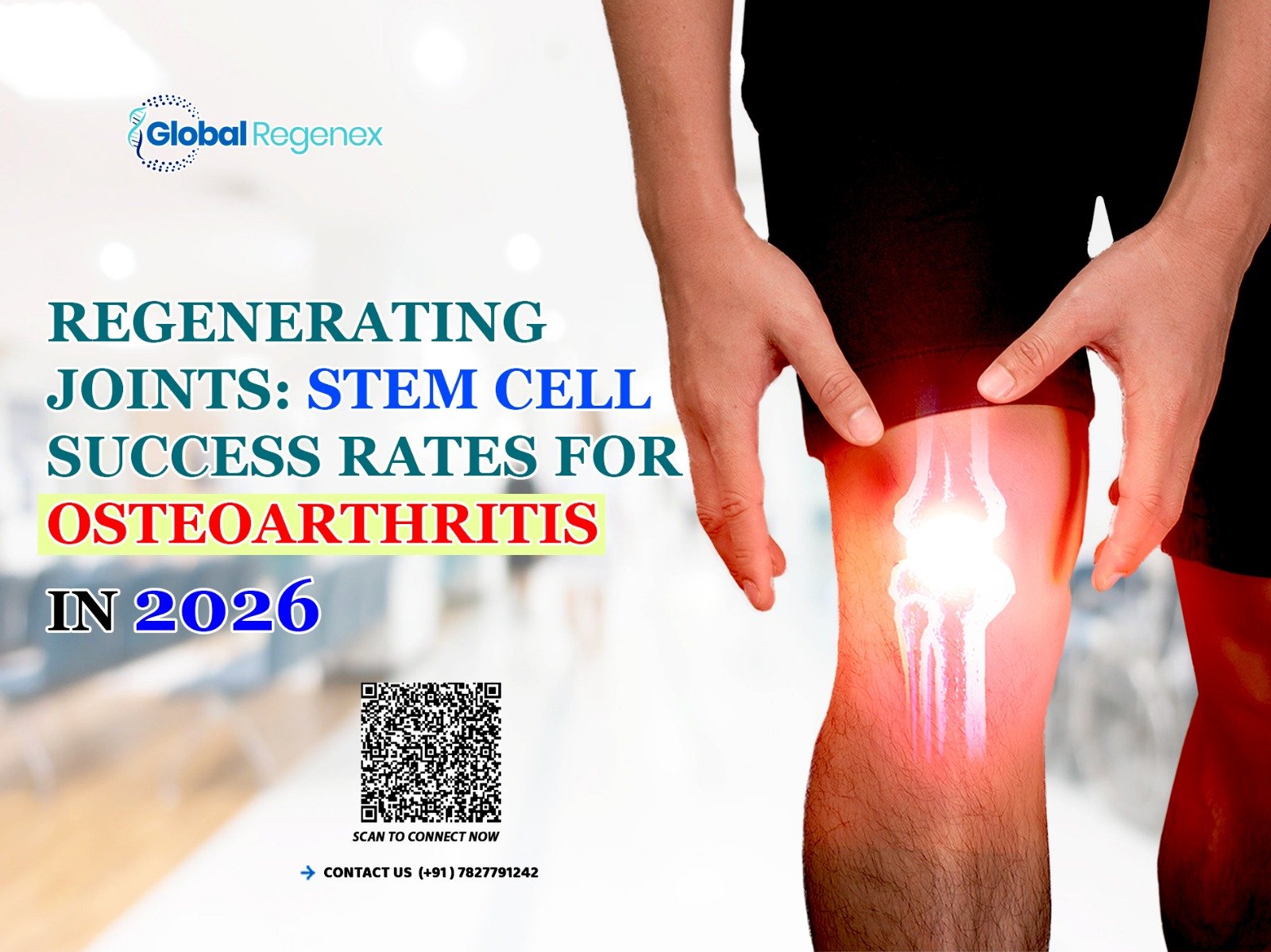
Summary: Stem cell therapy for osteoarthritis in 2026 promises a strong success in joint regeneration, enhancing mobility and decreasing pain with advanced medical science. With advanced technologies now supporting safer, more predictable outcomes for long-term relief.
With a lack of physical activities and a poor diet, millions of people are now suffering from osteoarthritis, limiting movement and causing severe pain that disrupts one’s daily life. Traditional treatments like medications or injections often lead to temporary relief, but they don’t repair the underlying joint pain and damage. Many patients may feel stuck between managing symptoms and avoiding surgery.
To talk about 2026, stem cell therapy is coming forward as a promising health treatment. With advancements in regenerative medicine, improved cell processing standards in the body, and better delivery methods, patients now experience stronger, more predictable results. Stem cell treatment in India is no longer just an idea but an alternative treatment for real joint repair. Let’s explore the success rate of stem cell therapy for osteoarthritis or joint repair.
What Is Stem Cell Therapy for Osteoarthritis?
Stem cell therapy uses the body’s natural healing system to repair and regenerate damaged tissues, reduce inflammation, and support long-lasting healing. For osteoarthritis, these cells help replenish cartilage, improve joint lubrication, and slow the progression of degeneration.
Here are some benefits of stem cell treatment for osteoarthritis:
- Natural repair of damaged cartilage
- Reduced swelling and stiffness
- Improved joint mobility
- Slower breakdown of joint structures
- Minimally invasive and faster recovery
- Long-term relief compared to traditional options
This makes stem cell therapy highly appealing for patients seeking alternatives to surgery or long-term pain medication. This form of treatment is increasingly recognized as one of the most promising approaches for cartilage regeneration therapy, helping joints regain function with natural biological repair.
Why Are Stem Cell Success Rates Improving in 2026?
The more advanced and precise the regenerative technology, the greater the success rate of the stem cell therapy. Some key upgrades that contribute to superior results include:
- Higher-Quality Stem Cells
As the research continues to progress, 2026 seems as a standards that guarantees much higher cell viability and purity, which means that the injected cells function much more effectively inside the joint.
- Enhanced Targeted Delivery
Doctors use image-guided techniques for delivering the stem cells precisely to the area of the cartilage where damage has occurred, thereby maximizing their therapeutic effect.
- Improved Understanding of Joint Biology
Modern diagnostics enable more tailored treatment regarding the individual condition of each joint, which further improves the prospects of success in dealing with the various stages of osteoarthritis.
- Stronger Anti-inflammatory Response
Many patients experience long-term reductions in swelling and joint irritation, allowing joint tissues to function more freely and comfortably.
- More Consistent Safety Standards
Nowadays, several regenerative clinics follow stricter guidelines in regard to processing and therapeutics. These guidelines lead to much safer and more predictable experiences for patients.
What 2026 Holds for Stem Cell Therapy for Osteoarthritis?
As stem cell treatment in India has emerged as an advanced alternative treatment for many degenerative conditions, research is still progressing. With improvements in regenerative medicine for joints, patient outcomes are expected to grow significantly as treatment precision increases. While real-world results for 2026 will depend on ongoing clinical advancements, early projections from current research trends suggest the following potential outcomes:
- A growing percentage of patients have experienced meaningful pain reduction.
- Mobility improvements are expected to rise due to better precision in cell delivery.
- Slower joint degeneration is becoming more achievable with enhanced regenerative techniques.
- More patients may be able to delay joint replacement surgeries as therapies advance.
- Future treatments will offer longer-lasting results as monitoring and personalization improve.
These projections are aligned with the expectations of the researchers and regenerative specialists, who foresee a gradual development of stem cell technologies up to 2026.
Who Can Benefit from Stem Cell Therapy for Osteoarthritis?
Stem cell treatment for osteoarthritis is most effective for individuals with:
- Mild to moderate osteoarthritis
- Persistent joint pain unresponsive to conservative treatment
- Thinning of cartilage, but not complete loss.
- Limited mobility owing to stiffness or swelling
- Desire to avoid or delay knee or hip replacement
- Active lifestyles affected by joint discomfort
Stem cell treatment works as an effective cell-based therapy for OA, especially in patients who want to avoid long-term medication or surgical intervention.
Not Ideal For
- End-stage “bone-on-bone” osteoarthritis
- Uncontrolled chronic illness
- Active joint infection
A consultation with an expert at Global Regenex helps you determine suitability and expected outcomes.
Expert Support: Global Regenex
The choice of regenerative treatment may sometimes become daunting, especially when more options are weighed. Expert evaluation is necessary to make safe and informed decisions.
Global Regenex consultation provides professional guidance, personalized assessments, and transparent treatment planning. Their team helps patients understand if stem cell therapy will be appropriate for their particular stage and type of osteoarthritis and offers support along the healing process.
Final Verdict
By 2026, stem cell therapy will be the flagship treatment of osteoarthritis, enabling patients to achieve real improvements in joint mobility, as well as pain relief lasting over time. Owing to success rates and the body’s regenerative potential continuing to improve, a future full of hope is finally opened to patients.
Frequently Asked Questions
Q1. How successful is stem cell treatment for osteoarthritis?
Ans. The majority of patients are able to enjoy long-term pain relief, better mobility, and slowed-down cartilage degeneration.
Q2. Are stem cells able to create new cartilage?
Ans. They facilitate the new cartilage creation, protect the already existing cartilage, but the outcome depends on the severity of the condition.
Q3. How long will the changes be effective?
Ans. Several patients are able to keep quite a lot of improvement for 12–36 months.
Q4. Is there stem cell therapy for OA in India?
Ans. Yes, India offers accredited and safe stem cell therapy for osteoarthritis with qualified specialists, state-of-the-art labs, and more cost-effective treatment options than many other countries.
Q5. How much is a stem cell treatment for osteoarthritis?
Ans. The costs depend on the clinic, the severity, and the treatment plan. The prices in India are much lower, while the quality is still good. Thus, it is accessible to a large number of patients.
Reference Links
- PubMed – Clinical outcomes of mesenchymal stem cell therapy in osteoarthritis
https://pubmed.ncbi.nlm.nih.gov/36653136/
- PubMed Central – MSC-based cartilage regeneration in knee osteoarthritis
https://www.ncbi.nlm.nih.gov/pmc/articles/PMC10007979/
- PLOS ONE – Long-term follow-up of stem cell therapy in osteoarthritis
https://journals.plos.org/plosone/article?id=10.1371/journal.pone.0280852