Table of Contents
Summary: Stem cell therapy provides new hope for patients with spinal cord injury that supports nerve repair, reduces inflammation, and promotes partial functional recovery. It is a potential regenerative treatment approach showing promising improvements in mobility, sensation, and long-term healing.
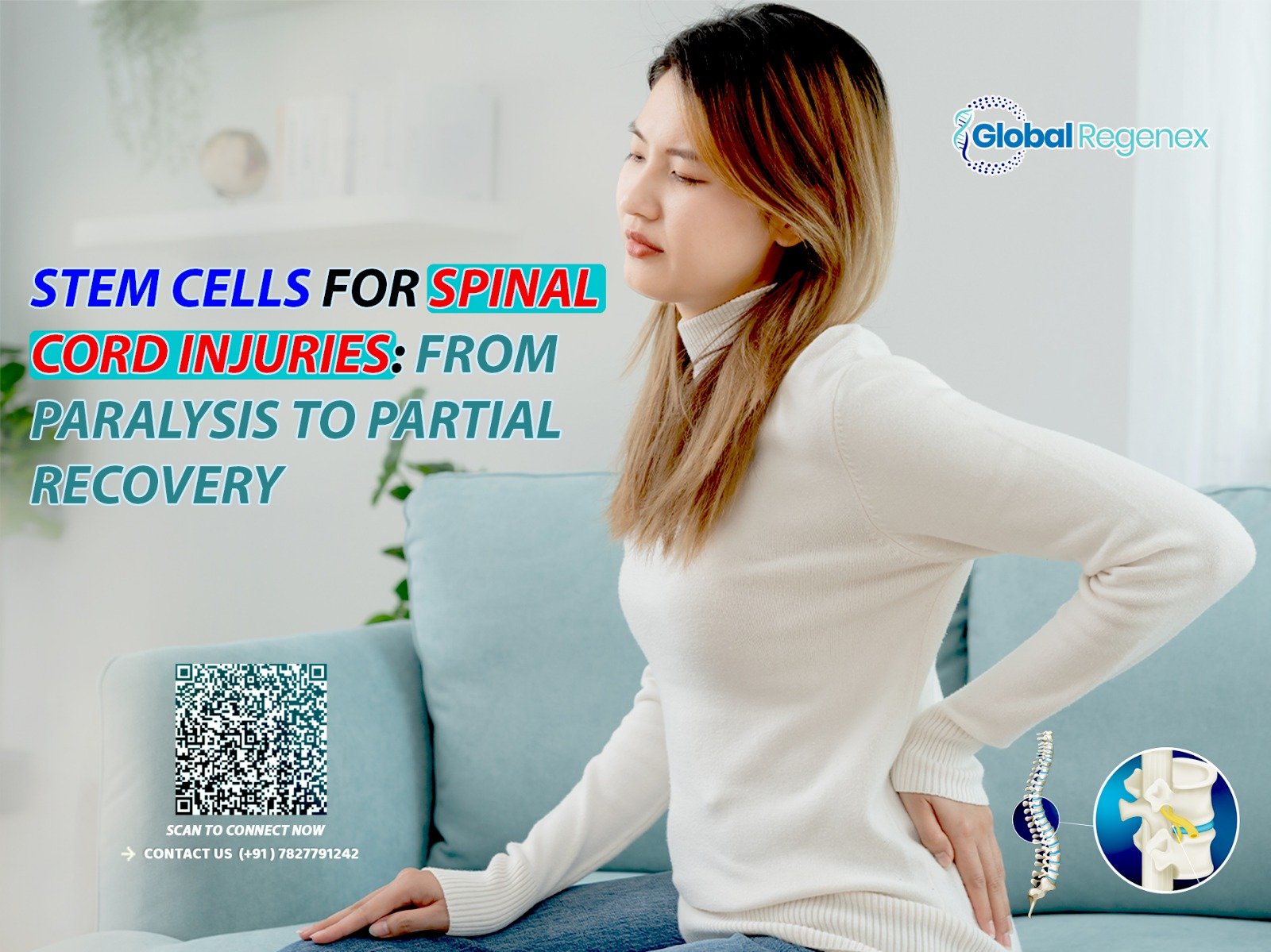
Suffering from spinal cord injury can drastically alter someone’s life in an instant-turning movement, sensation, and independence into daily challenges. Traditional treatments have been mostly aimed at preventing further damage, although they are often unable to reverse paralysis or restore function.
But now, regenerative medicine is opening new horizons. Stem cell therapy in India aims to encourage nerve repair, reinstate communication between cells, and improve movement or sensation over time, hence becoming a hopeful option for so many patients seeking stem cell therapy for paralysis. While far from a complete cure, the partial recovery that this might make possible brings renewed hope to families around the world. Let’s explore what spinal cord injury is and how stem cell therapy can help.
What Is Spinal Cord Injuries?
A spinal cord injury occurs when a person suffers from a traumatic disruption in the communication between the brain and the body. Depending on the severity of the condition, it may lead to:
- Partial or complete paralysis
- Loss of sensations
- Difficulty in bladder or bowel control
- Muscle weakness and spasm
- Reduced independence in daily activities
Once thought irreversible, these injuries are now being reassessed with the growing advancements of regenerative therapy. Learn more about regenerative solutions for neurological recovery.
How Stem Cell Therapy Helps Spinal Cord Injuries?
These cells can switch to any kind of cell type and mend damaged tissues. In the case of spinal cord injuries, they act as follows:
- Nerve Regeneration Support
Stem cells work to replace the lost neurons by helping to reconnect pathways within the spinal cord and supporting the gradual return of function.
- Inflammation Control
Severe inflammation disrupts the healing process. The healing molecules produced by stem cells mute inflammation, which helps the damaged tissues respond accordingly.
- Communication Signals Restoration
These stem cells facilitate the repair of myelin damage and support the neural pathways, enabling better signal transmission between the brain and the body.
- Prevent Further Degeneration
These stem cells can protect the remaining nerve cells and slow down further deterioration.
- Enhancing Functional Recovery
Over time, some patients find gradual improvements in their mobility, sensation, bladder control, and muscular strength.
What Improvements Can Patients Expect?
These improvements are gradual and may continue for months as the nervous system responds to regeneration:
- Better mobility of the limbs or muscles
- Partial restoration of sensation
- Improvement in bladder and bowel management
- Reduced spasticity
- Stronger trunk control
- Better quality of life
The chances of recovery depend on the severity of injury, the timing of treatment, physical therapy, and general health.
Who Is a Good Candidate for Stem Cell Therapy?
Patients may benefit if they have:
- Cervical, thoracic, or lumbar injury
- Partial or complete paralysis
- Chronic or recent spinal cord trauma
- Limited efficacy with standard treatments
- Good overall stability and medical fitness
Each case requires detailed evaluation.
Top Benefits of Stem Cell Therapy for Spinal Cord Injuries
Here are some benefits of stem cell treatment for spinal cord injuries in India:
- Minimally Invasive Treatment
Stem cell therapy is a less to no invasive procedure that reduces the risk and recovery time significantly. In most cases, patients can go back to their routine activities soon after, making it seamless for patients with mobility issues.
- Works at the Cellular Level
Stem cells do not simply mask symptoms like drugs. In fact, they go straight to the interaction with the injured nerve tissue. These cells secrete factors that attract the body’s own cells, stimulate new cells to grow, and even repair the road for neurons to communicate in the spinal cord, which is a far cry from what conventional therapies can do.
- Long-Term Healing Potential
Recovery continues gradually as the new cells integrate with existing tissues. In fact, many patients report improvements for several months, making this therapy potentially a long-term approach rather than some kind of quick fix.
- Improves Daily Living
Even partial improvements, such as increased trunk control, fewer spasms, or more sensation, may greatly enhance independence. These changes help patients in managing daily activities with more confidence and less assistance.
- Improves Rehabilitation Outcomes
Stem cell therapy, when combined with disciplined physiotherapy, can amplify progress. New cells create a more receptive environment for nerve training and help patients achieve stronger physical and functional gains.
For Expert Advice
Deciding on regenerative treatment may be overwhelming, especially when the condition is life-changing. For clear evaluation, ethical guidance, and supportive care, Global Regenex offers expert consultation to help patients understand whether the stem cell treatment fits into their stage and type of injury.
To Bring It All Together
Stem cell therapy brings renewed hope for spinal cord injury patients, offering potential improvements in movement, sensation, and independence. While not a cure, its regenerative power can support meaningful recovery. For personalized guidance, consult Global Regenex.
Commonly Asked Questions
Q1. Is paralysis from a spinal cord injury curable?
Ans. It is possible to recover, but only partially, not completely. Most patients get increased strength, sensation, and daily function through rehabilitation and regenerative treatments.
Q2. Do stem cells cure paralysis?
Ans. While stem cells cannot completely reverse paralysis, they do provide nerve repair support, reduce inflammation, and have helped patients regain partial mobility or sensation over time.
Q3. How long does it take to recover from an incomplete spinal cord injury?
Ans. The recovery time is different for each case. Some may see improvement within a few weeks, but substantial progress is usually made over several months with physiotherapy and regenerative treatments.
Q4. Is it possible to regain movement after paralysis?
Ans. Yes, partial mobility may come back depending on the level of injury. This is quite common to have improved movement, balance, and muscle control through the use of treatments involving stem cell therapy, rehabilitation, and stimulation.
Reference Links
- PubMed – Stem cell therapy for spinal cord injury: clinical and functional outcomes
https://pubmed.ncbi.nlm.nih.gov/36870032/
- PubMed Central – Mesenchymal stem cells in spinal cord injury repair (full-text review)
https://www.ncbi.nlm.nih.gov/pmc/articles/PMC10101377/
- Nature Reviews Neurology – Regenerative medicine approaches for spinal cord injury
https://www.nature.com/articles/s41582-023-00796-5
- Wiley Online Library – Anti-inflammatory and neuroprotective effects of MSCs in SCI
https://onlinelibrary.wiley.com/doi/10.1002/jnr.25239
- PLOS ONE – Long-term neurological recovery after stem cell treatment in SCI
https://journals.plos.org/plosone/article?id=10.1371/journal.pone.0283124