Table of Contents
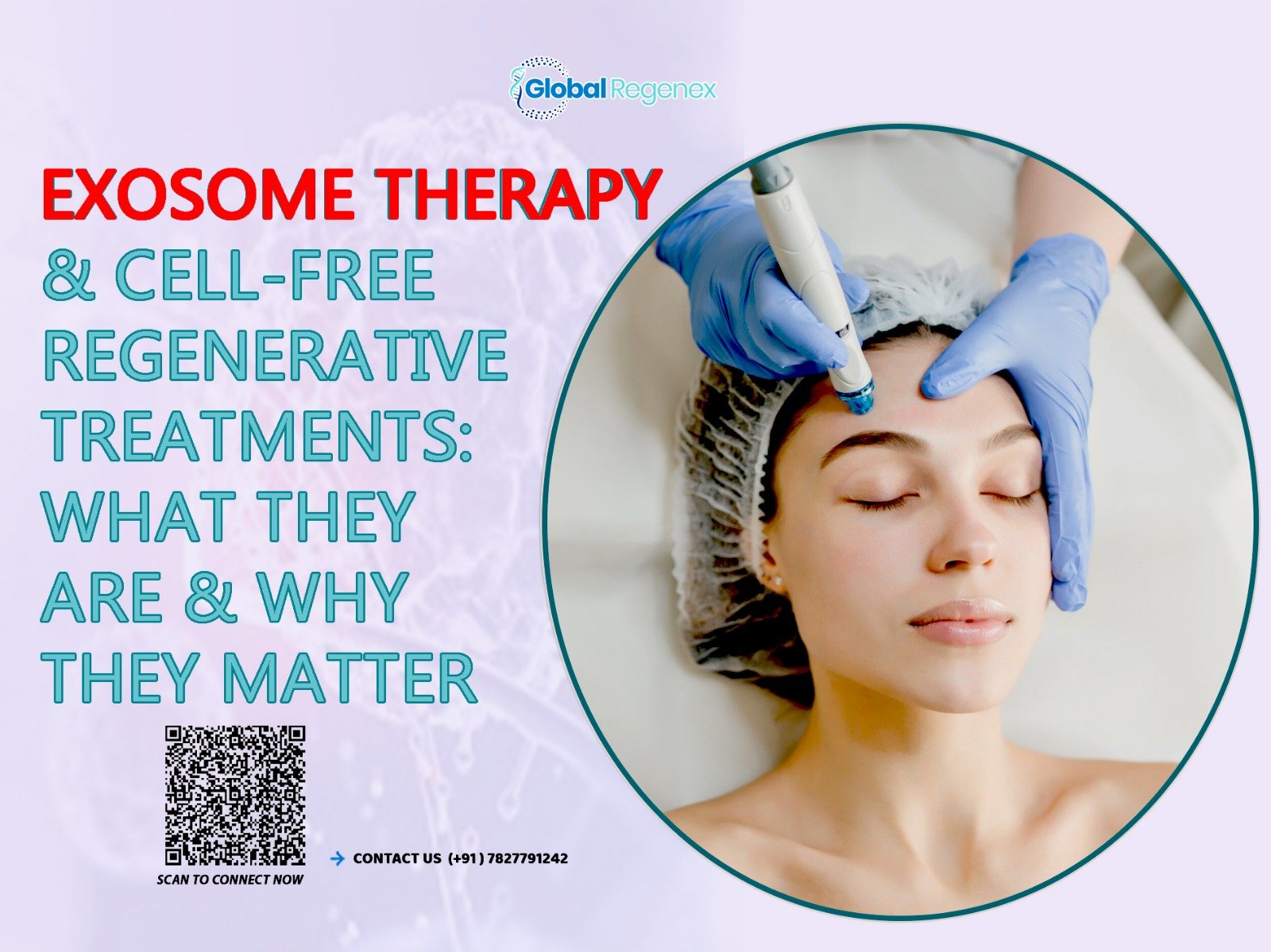
Summary: Exosome therapy is one of the most powerful cell-free regenerative treatments that repairs tissues, reduces inflammation, and improves healing naturally. This blog explores how exosomes work, their benefits, medical uses, and why they are becoming important in modern regenerative medicine.
Have you ever thought of the way treating your condition without the need for surgery or any long-term treatment? This is only possible with modern regenerative medicine through exosomes therapy, a cell-free yet powerful treatment reshaping how patients recover from injuries, inflammation, and severe disease.
Not like any traditional therapies that just soothe symptoms, exosomes present targeted healing signals that repair tissues from the inside out. The ability to decrease inflammation, support regeneration, and enhance cell communication is what is making them gain attention across the world in the area of cell-free regenerative medicine. If you are looking for a natural and science-backed path to healing, the coming sections will guide you to understand exactly why exosomes matter.
What Is Exosome Therapy?
Exosomes are small, naturally occurring particles that healthy cells release, particularly stem cells. They act as the communicative messengers of the body, carrying healing signals to sites that require some repair.
How do they help the body in healing?
- Carry growth factors that assist in tissue repair
- Improve cell-to-cell signaling and coordination
- Reduce inflammation in damaged or stressed tissues
- Promote regeneration without using live cells
Exosomes, according to research from around the world, play an important role in immune balance, wound care, and musculoskeletal and neurological repair.
Exosome Therapy: How It Works
Exosome therapy is an infusion or targeted injection method that introduces the healing messengers into damaged tissues.
What happens in the body:
- Exosomes help reduce inflammation by calming down excessive immune activity.
- Tissues begin repairing with improved activity of the growth factor
- Cell communication improves, thus accelerating recovery.
- Regeneration improves, supporting long-term structural repair.
Medical studies indicate that exosomes have the power to influence tissue healing pathways just like their parent stem cells, but without the safety concerns associated with cell-based treatments.
What Are the Benefits of Exosome Therapy?
Here are some benefits of exosome therapy:
- Reduces Inflammation
Exosomes contain powerful anti-inflammatory signals that calm the overactive immune response, which leads to less swelling, stiffness, and pain in the affected joints, nerves, and muscles, thus creating a much better environment for long-term healing.
- Natural Tissue Repair
Exosomes also deliver growth elements that direct the damaged cells toward repair. This can facilitate healthy tissue regrowth of cartilage, tendons, skin, and nerves, making patients’ recovery more complete and long-lasting instead of simply temporary symptom relief.
- Balance Immune System
Exosomes modulate the immune pathways to depress excessive immune activities without suppressing the necessary immune functions. Such a balance is particularly beneficial for autoimmune problems, chronic inflammation, and long-term degenerative disorders.
- Boost Natural Healing
Exosomes essentially speed up the body’s natural repair cycle that is natural to it by making cell communication more effective. Quite a few patients report that their recovery is speedier and that their downtime is shorter, and that tissue regeneration that is smooth is their experience after an injury, a medical procedure, or an orthopedic surgery.
- Cell-Based Therapy
Since exosomes do not contain any live cells, they are safe for those patients who might not qualify for stem cell procedures because of age, immune conditions, or other medical restrictions. This will dramatically expand treatment accessibility.
- Less Risk of Rejection
Since exosomes do not bear cellular structures, they do not provoke immune rejection. Because of this, exosomes are biologically safe, predictable, and well-tolerated. In this way, complications are minimized, with consistency in treatments for various medical conditions improved.
Some Medical Conditions That May Benefit From Exosome Therapy
Many exosomes are being researched in several fields for their different therapeutic uses. The promising response in the following conditions can be noted:
- Osteoarthritis & joint inflammation
- Tendon injuries and sports-related damage
- Neuropathy and nerve injuries
- Autoimmune inflammation
- Skin repair, burns, wound healing
- Dry eye disorder and corneal impairment
- Metabolic and chronic inflammatory disorders
Their wide-ranging impact on immune and repair pathways makes exosomes a versatile treatment option.
For Expert Consultation
This is especially so for regenerative therapies, particularly exosome treatments. Global Regenex aids the patients in understanding whether they are potential candidates by providing transparent assessments, expert advice, and safe access to the latest regenerative protocols. The approach of this center is very patient-oriented, ensuring that each patient receives personalized, trustworthy support from exosome therapy consultation to recovery.
The Concluding Thoughts
Exosome therapy promises safe, natural, cell-free regeneration to make a difference in the future of healing. Backed by growing research and clinical usages, expert knowledge provided by Global Regenex gives patients an empowering alternative for long-term recovery.
Frequently Asked Questions
Q1. What is exosome therapy in simple terms?
Ans. Exosome therapy uses tiny healing messengers from stem cells to reduce inflammation and repair damaged tissues in natural ways, sans the use of whole cells.
Q2. How long does it take to realize the results?
Ans. Most patients find noticeable changes within 4–12 weeks, though depending on the condition and general health.
Q3. Is exosome therapy safe?
Ans. Yes, it is safe if done under expert supervision, since exosomes contain no living cells, and consequently, there is a minimal chance of being rejected.
Q4. Which conditions are more responsive to exosome therapy?
Ans. Promising improvements concerning the current research are seen regarding joint pain, tendon injuries, nerve damage, autoimmune inflammation, and skin repair.
Q5. Is exosome therapy superior to stem cell therapy?
Ans. Not always. Each of them has its strong points. Exosomes are ideal for cell-free healing, whereas stem cells are utilized where the requirement for deeper tissue regeneration exists.
Reference Links
PubMed – Exosome Therapy in Regenerative Medicine
https://pubmed.ncbi.nlm.nih.gov/?term=exosome+therapy+regenerative+medicine
PubMed Central (PMC) – Full-Text Studies on Exosomes & Healing
https://www.ncbi.nlm.nih.gov/pmc/?term=exosomes+tissue+repair
Nature Reviews Molecular Cell Biology – Biology of Exosomes
https://www.nature.com/articles/nrm.2017.125