
Summary: Nowadays, stem cell therapy has changed the way we treat severe pain, injuries, and degenerative conditions. But while some patients who underwent the treatment may notice results within a few weeks, others take months to experience improvement. The difference is normal, and often influenced by factors like health, condition type, and care quality.
Did it ever occur to you mind why some patients can rebound quickly with stem cell therapy, while others require more time? The fact is in the body’s natural healing process. Stem cell therapy isn’t a quick fix, it’s a biological repair system that goes down to the core of your tissues. It operates slowly but surely, and health gets restored from the inside out.
Some patients experience full mobility and reduced pain in weeks, while others see improvement over many months. The key to a faster, durable recovery is understanding these differences and setting proper expectations. We’ll explore the real reasons behind these varying results after stem cell treatment in India.
How Stem Cell Therapy Works?
Stem cell therapy uses the body’s own cells and regenerative power to heal damaged tissues. When stem cells are injected into the affected area, they transform into specialized cells and release growth factors that enhance natural healing.
The process takes time, but the body needs to:
- Accept and integrate new cells.
- Stimulate tissue regeneration.
- Restore normal function slowly.
However, the healing depends on how your body responds to treatment, your overall health, and the type of cells used.
Factors That Influence Recovery Speed in Patients
Here are some factors that may influence the result of stem cell therapy:
- Condition Type and Severity
The recovery of a mild case, such as an early-stage arthritis or a minor tendon or cartilage injury, is usually speedy as it entails less structural repair, thus the regenerative processes can be initiated rapidly. However, chronic or complicated disorders (e.g., Parkinson’s or spinal cord injuries) are slow to heal, hence they require more sessions and a longer duration.
- Patient’s Age and Overall Health
Younger, healthier patients tend to react faster due to more active cells and a strong immune system. Older patients, or those with problems such as diabetes, will see the benefits more slowly since their body regeneration is not as rapid.
- Type of Stem Cells Used
The source and quality of stem cells also matter.
- Autologous stem cells come from a patient’s bone marrow or fat and are often the most quickly accepted by the body.
- Allogeneic stem cells from donors, such as umbilical cord tissue-are similarly effective but may take a little time to integrate, depending on the type of therapy.
- Quality of Treatment and Expertise
The quality of recovery depends on the expertise of the clinic, facilities, and laboratory standards. Advanced facilities coupled with accredited labs mean purer, more viable stem cells, translating to faster and more consistent recovery.
- Post-Treatment Care and Lifestyle
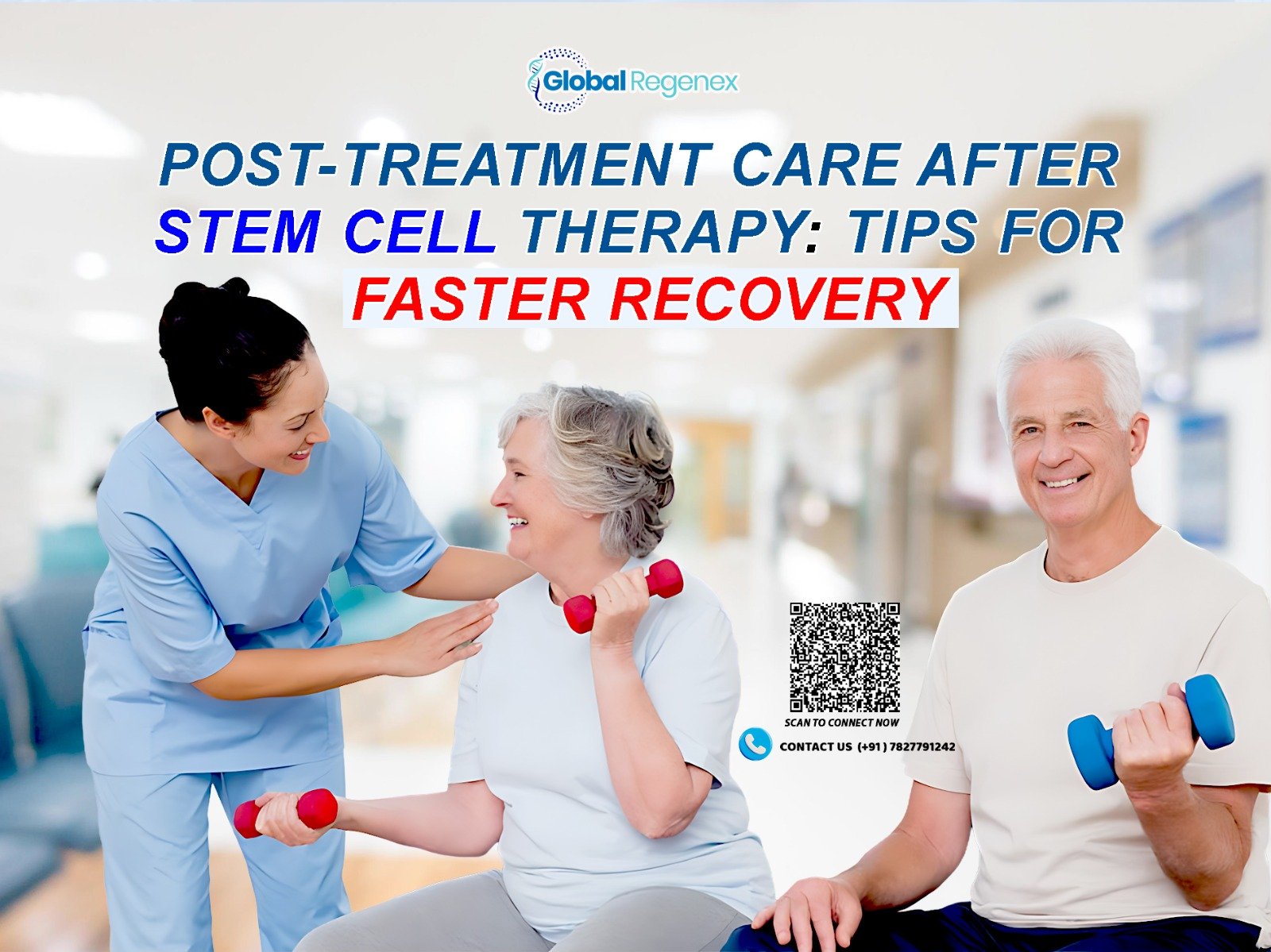
Following the cure, a fast, durable recovery requires dedication. You must follow medical directions, eat nutritious food, and avoid smoking or alcohol. Recovery is often accelerated by combining stem cell therapy with physiotherapy, yoga, or gentle exercises.
Common Timeframes for Improvement
The regeneration process of the body occurs at different rates according to the condition:
Early Responders (2–4 weeks): Typically, these are orthopedic or sports injuries. Patients usually observe a decrease in pain and swelling very quickly.
Gradual Responders (2–3 months): Patients with degenerative joint diseases or mild neurological conditions start regaining functions and mobility progressively.
Long-Term Responders (6–12 months): Those with autoimmune and chronic nerve disorders may take longer but often see steady, meaningful improvement over time.
Remember: Slower results don’t mean the therapy is not working. Healing continues beneath the surface as stem cells restore balance and integrity to tissues naturally.
Why Professional Help Matters?
If you talk about regenerative medicine, it is the most crucial factor to have the right direction. Global Regenex is a reliable consultancy that facilitates patients ‘ access to the best stem cell centers in India.
They are the specialists in:
- Medical Judgments: Understanding your health and suggesting the most suitable treatment.
- Clinics with the Certification: Only those centers that have been ethically approved and GMP-compliant are the ones that patients are connected with.
- Individual Healthcare Programs: Modifying treatments according to each patient’s situation and health objectives.
- Complete Support: Along with travel assistance, therapy follow-up, and lifestyle guidance.
With the help of Global Regenex, you get more than healing, but you get continuous support, empathy, and professional guidance, which leads to speedy recovery.
The Bottom Line
The power of the personalized healing journey is immense with stem cell therapy. Recovery speed may be influenced by age and condition, but every step taken guarantees regeneration and relief. Connect with Global Regenex for expert, compassionate care.
Frequently Asked Questions (FAQs)
Q1. How long does it take to see results from stem cell treatment?
Ans. Results vary, as some patients experience results in a few weeks, though it can take a couple of months as the body regenerates tissue gradually.
Q2. How does stem cell therapy work for Parkinson’s disease?
Ans. It repairs or replaces damaged nerve cells that control movement, thereby decreasing tremors and stiffness over time.
Q3: Do stem cells work right away?
Ans. No, it takes time for stem cells to integrate and repair tissues. Most patients will witness gradual improvement over weeks or months.
Q4. How does Global Regenex help patients achieve better results?
Ans. Global Regenex connects you with top clinics, provides expert consultation, and ensures personalized care for faster, safer recovery.
Reference Links
Caplan AI, Correa D.
The MSC: An injury drugstore.
Explains gradual paracrine signaling, tissue repair, and delayed clinical response
https://pubmed.ncbi.nlm.nih.gov/27774387/
MDPI – Cells
Impact of aging and metabolic disease on stem cell function.
https://www.mdpi.com/2073-4409/9/2/421
Frontiers in Bioengineering & Biotechnology
Disease severity determines regenerative response speed.
https://www.frontiersin.org/articles/10.3389/fbioe.2020.00864/full
Clinical differences between autologous and donor-derived MSC therapy.
https://stemcellres.biomedcentral.com/articles/10.1186/s13287-020-01719-8
Centeno CJ et al.
Rehabilitation and lifestyle influence outcomes after stem cell therapy.
https://pubmed.ncbi.nlm.nih.gov/25770868/